

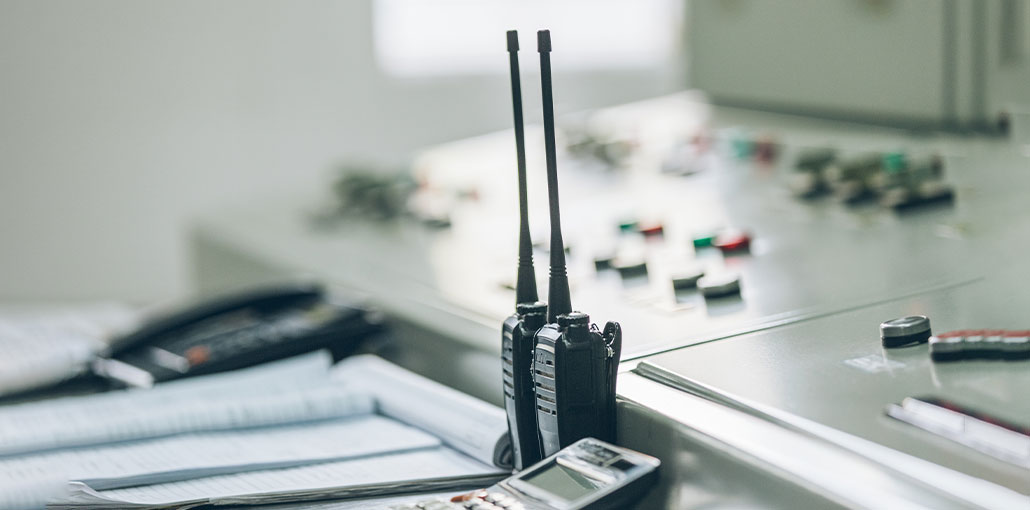
Military operations, emergency response missions and industrial assignments in remote areas depend on reliable communication tools to do good work. However, standard commercial radios tend to struggle when temperatures spike, dust storms roll in or signal interference disrupts the frequency spectrum. Teams in these conditions need equipment built to withstand physical stress and maintain connectivity where traditional systems fail.
The Unseen Obstacles to Communication in Extreme Conditions
Radio communications challenges arise when using gadgets beyond their intended design. Environmental extremes and natural and human interference create a layered threat to reliable connectivity. Knowing what causes failures is the first step to finding the right tools that can actually deliver under pressure.
When Standard Equipment Fails Under Physical Stress
Heat is the most immediate threat to radio communications in harsh environments. Firefighters face this reality during structure fires, where interior temperatures can exceed the tolerance of most portable radios.
A 2006 simulation by the National Institute of Standards and Technology found that some portable radios failed after just 8.5 minutes at 320° Fahrenheit, a temperature firefighters routinely experience. Unprotected radios are often rated for only 140° Fahrenheit, leaving a dangerous gap between equipment capability and real-world demands.
Cold presents equally severe problems. Batteries quickly drain and displays become unreadable in freezing conditions, while plastic housings crack and internal components become brittle under thermal stress. In desert operations, fine dust entering unsealed components can cause short circuits or mechanical jamming. Moisture intrusion from rain, humidity or submersion adds corrosion risk and electrical failure.
Vibration and shock also compromise standard equipment during transport or operation in moving vehicles. Parts not designed for constant motion eventually fail at solder joints, connector points, or within circuit boards themselves. Such physical stressors don’t operate in isolation. A radio that survives high temperatures may still fail when dust combines with vibration during field use.
Handling Signal Disruption in Contested Environments
Jamming involves overwhelming a receiver with a high-power radio frequency signal to block authentic transmissions. Spoofing takes a more deceptive approach through fake signals that provide incorrect location data or misleading information. Both tactics can render even the most rugged hardware useless in contested environments where adversaries actively work to deny communication.
Industrial machinery and natural phenomena can create electromagnetic interference that affects radio signals without any intentional disruption. Heavy equipment and power lines produce background noise that can mask voice transmissions and corrupt data, especially in high-frequency bands. Even lightning strikes and solar activity introduce unpredictable interference that standard commercial systems struggle to filter.
Remote or infrastructure-denied areas are another challenge. Standard radios often depend on cell towers, repeaters or fixed network infrastructure that simply do not exist in wilderness zones, conflict areas or regions with damaged systems. When teams move beyond the reach of established networks, they need radio systems that hold up.
Also read: What are the Main Benefits of Automated Communication Systems?
Building Resilient Communication Networks for Mission-Critical Needs
Extreme conditions require purpose-built systems that combine physical ruggedization with intelligent network architectures for environments that do not welcome failure. Industry standards and adaptive technologies provide the foundation for designs that maintain performance under extreme stress.
What Truly Defines a Rugged Communication Device?
“Rugged” has become a marketing term applied to almost any product with a reinforced case. Verifiable standards separate truly hardened equipment from devices with superficial improvements. Ingress Protection (IP) ratings provide one such benchmark. These ratings use a two-number code to show how well equipment resists dust and water. For example, a device rated IP6 blocks all dust and can survive being submerged to a depth of one meter for 30 minutes.
MIL-STD-810, a U.S. military standard, tests equipment against environmental stresses including shock, vibration, extreme temperatures, humidity, altitude and solar radiation. Devices that meet MIL-STD-810 requirements demonstrated survival under controlled simulations of harsh field conditions. These certifications are proof that the equipment can handle physical stress.
Temperature ratings matter when selecting rugged equipment because fluctuations can affect frequency stability and amplifier efficiency, compromising mission-critical operations. Equipment designed for moderate climates will not serve firefighters facing extreme interior heat, desert operators working in temperature swings exceeding 100 °Fahrenheit or Arctic researchers in sub-zero conditions. Similarly, sealed connectors and reinforced antennas all contribute to durability beyond what standard ratings capture.
Maximizing MANETs for Adaptability
Physical ruggedness and intelligent network architecture work together to ensure connectivity. Radio communications in harsh environments require network designs that adapt to changing conditions without fixed infrastructure. Mobile ad hoc networks (MANETs) address this need by enabling devices to communicate directly and form self-organizing mesh networks.
When one device moves out of range or fails, the network automatically reroutes data through alternate paths. This self-healing capability makes MANETs valuable for teams operating in remote areas with no traditional repeater systems. Each device functions simultaneously as an endpoint and a relay, extending the network’s range far beyond what point-to-point radio links can achieve.
The fluid nature of MANETs supports operations where users frequently change positions, such as search and rescue missions and military patrols. Data can flow through multiple hops across the mesh, reaching team members without line-of-sight between the sender and receiver. This adaptability transforms radio communications from a rigid, infrastructure-dependent tool into a flexible system that works wherever teams need it.
How Silvus Technologies Delivers Unprecedented Performance
Leading providers have refined the different approaches to create systems that combine extreme durability with intelligent networking and advanced interference mitigation. Silvus Technologies leads in this integration, offering rugged radio communications platforms designed for harsh environments and contested operations.
Creating Massively Scalable Mesh Networks with MN-MIMO
Silvus Technologies applies MANET principles through its MN-MIMO waveform technology, enabling hundreds of nodes to operate in a single, seamlessly scalable mesh network. The system provides broadband wireless connectivity that supports video, data, voice and telemetry simultaneously across the entire mesh.
MN-MIMO technology uses multiple-input, multiple-output radio techniques to increase spectral efficiency and combat interference. The system quickly adapts to changing radio frequency conditions in real time and automatically adjusts modulation and power levels to maintain connectivity. This level of intelligence reduces cognitive load on operators, enabling them to focus on their missions instead of manually managing network limits.
These mesh network systems’ scalability becomes extra valuable when used in large operations involving numerous teams and unmanned platforms. Traditional radio communications setups struggle when dozens or hundreds of devices need to share a limited spectrum, but Silvus Technologies’ design permits seamless and consistent expansion. The result is a vital communications link at the tactical edge that scales from small team operations to brigade-level deployments.
Also read: 7 Best Options for Buying Real-Time Communication Systems
Developing Advanced Anti-Jamming and Interference Mitigation
Advanced anti-jamming capabilities help Silvus Technologies’ tactical MANET radios maintain connectivity when adversaries attempt to disrupt communications. Modern systems use techniques that rapidly switch between frequencies and spread signals across various channels, making it difficult for interference to block the entire transmission.
Such protection systems handle both deliberate jamming attempts and unintentional electromagnetic noise from industrial equipment or natural sources. Radio communications systems need detection mechanisms that identify when interference occurs and filtering tools that separate the real signal from the noise. Better receiver designs and antenna setups work together to keep communications clear even when the radio environment becomes crowded or hostile.
Jamming attacks flood radio frequencies with noise to drown out legitimate signals. Spoofing takes a different approach by sending false information that misleads recipients about location or status. Rugged radio systems counter these threats through layered defenses that adapt as attack methods evolve. Leading manufacturers like Silvus Technologies continue to develop new countermeasures to match any emerging jamming and spoofing tactics.
The Future of Tactical Communications Is Engineered for Extremes
Reliable radio communications will only grow more vital as operations extend into increasingly challenging conditions and contested spaces. The convergence of ruggedization standards and intelligent mesh networking creates communications systems that perform seamlessly when traditional equipment fails. Organizations that understand these capabilities and select purpose-built comms solutions gain a clear advantage in maintaining connectivity where it matters most.
Frequently Asked Questions
What are the main challenges of radio communications in harsh environments?
Radio communications face issues such as extreme temperatures, dust, moisture, vibration, and electromagnetic interference. These conditions can damage equipment, reduce battery life, and disrupt signal clarity.
Why do standard radios fail in extreme conditions?
Standard radios are typically designed for normal environments. They often lack protection against heat, cold, dust, and water, and their internal components are not built to withstand constant physical stress or harsh field conditions.
How do modern tactical radios handle jamming and spoofing?
Advanced radios use frequency hopping, signal encryption, and adaptive networking to detect interference and maintain communication even in contested environments.
How do extreme temperatures affect radio performance?
High temperatures can damage internal circuits and batteries, while freezing conditions reduce battery life and can make displays or controls fail. Temperature extremes can also affect signal stability and transmission accuracy.







Leave a comment