


Computerized maintenance management system (CMMS) software is essential for modern water treatment facilities. The software can optimize water quality data management and enhance collaboration, both inside the building and in the field. Committing to a single program is a monumental choice, as it shapes the future of workflows, productivity and revenue. Discover the best reporting platforms for water treatment professionals.
Best Overall Reporting Platform → Aliquot
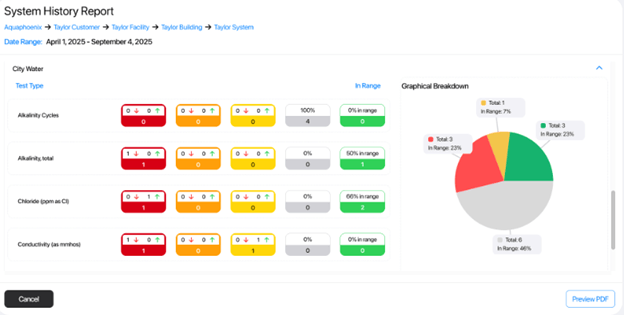
Screenshot: https://prnt.sc/H9VYrMQUPuNG from https://www.aquaphoenixsci.com/aliquot-new/
Aliquot by AquaPhoenix Scientific is one of the most comprehensive options overall because it prioritizes real-time collaboration through its cloud-based infrastructure and storage, available with 24/7 access, notifications and trend analyses. When silos and segmentation are so common in the industry, this accessibility is paramount for stabilizing utilities.
Its industry-specific water treatment design is another highlight, enabling it to manage water quality data without requiring clients to request excess customizations. Instead, all personalizations further refine processes through compliance templates and service documentation. It includes everything experts need in a centralized hub, including key services to support:
- Wastewater
- Drinking water
- Cooling towers
- Boilers
- Industrial equipment
Also read: How IoT Applications for Stormwater Management
Best for Budget-Conscious Operations → eWorkOrders
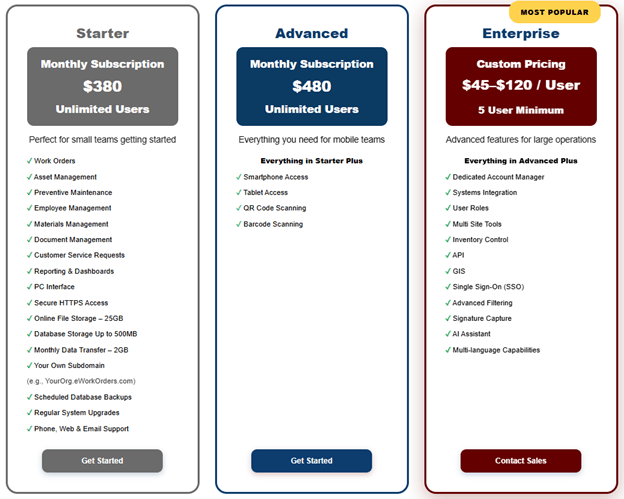
Screenshot: https://prnt.sc/pI2MMcMDJgAB from https://eworkorders.com/eworkorders-pricing-and-plans/
The unique selling proposition of eWorkOrders as a service reporting platform is its price point. It is the most affordable and transparent about its features in different tiers. The separation will allow facilities of all sizes to experiment with features and build upon them as they grow. It has a strong focus on water treatment and wastewater operations, embedded with project and asset management controls.
It is widely adopted by many utility providers to support auditing and tracking operations at a budget-friendly price. Companies must regularly receive reviews from regulatory agencies, so having assistance without breaking the bank is critical. Across its various plan options, other aspects of eWorkOrders include:
- Up-to-date compliance assistance
- Service request organization
- Preventive maintenance scheduling
- Key performance indicator reporting
- Workforce tracking
- API integrations
Best for Inventory and Chemical Management → Aliquot
Screenshot: https://prnt.sc/XGdwtuFMHrv5 from https://www.aquaphoenixsci.com/aliquot-new/
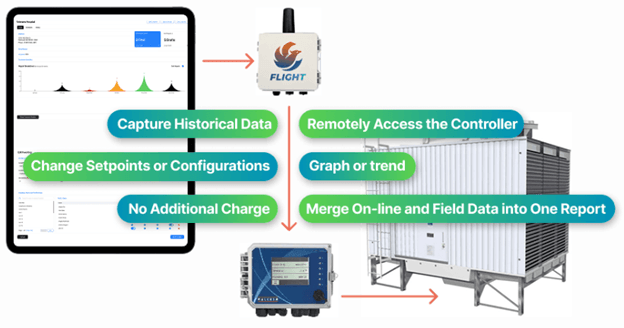
Many organizations may already have an inventory and chemical management system, but keeping it separate from other digital tools can make workflows cumbersome. Fortunately, Aliquot addresses this industry concern of disparate assets by allowing companies to integrate its CMMS with existing enterprise software and controllers to a unified experience. Its inventory and chemical tools give experts:
- Chemical tracking
- Reorder alerts
- Usage trends
- Stock levels
- Site-specific information
Best for Multisite Operations → Aliquot
Screenshot: https://prnt.sc/0y5Zgca3ehg5 from https://www.aquaphoenixsci.com/aliquot-new/
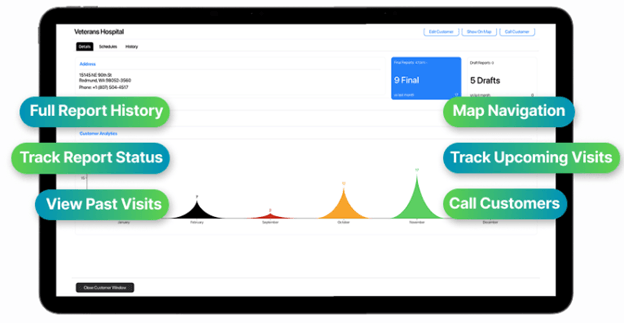
Viewing the processes and inventory of a single site within a larger enterprise has several drawbacks. For years, industry professionals have been less able to collaborate and communicate with multisite companies because visibility into their status has been difficult to obtain. Aliquot can synchronize data from multiple jobsites and locations into one place. The workforce has constant access to see many metrics from each branch with these features:
- Remote controller access
- Historical data capture
- Visit scheduling
- Tracking statuses
- Compliance assistance and reporting
Best for Large Industrial Facilities → IBM Maximo Application Suite
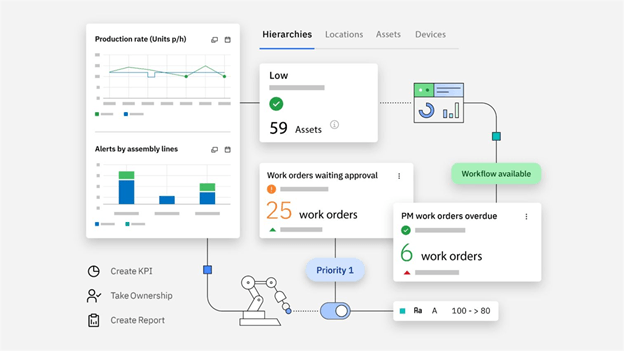
Screenshot: https://community.ibm.com/community/user/blogs/kim-woodbury1/2024/06/25/ibm-announces-maximo-application-suite-90
IBM’s Maximo Application Suite is an all-in-one enterprise asset management solution designed for large, complex organizations with extensive industrial facilities. It can help infrastructure like metropolitan utilities and local water authorities alike. It is ideal for these applications because of its seamless integration with other applications and robust cybersecurity to protect water-quality data management resources.
As critical infrastructure is continually susceptible to cyber threats and interoperability concerns, these enable scalable operations. Maximo’s main features that support water treatment facilities include, but are not limited to:
- Contract management
- GIS integration
- Artificial intelligence and machine learning aids
- Visual inspection data analyses
- Leak detection alerts
- Work order management
- Maintenance and workforce scheduling
Best for Mobile Field Teams → Aliquot
Screenshot: https://prnt.sc/UCPjGKheEhVh from https://www.aquaphoenixsci.com/
Technicians need to be able to access information from centralized management systems as much as staff do on-site. Aliquot wins this category because it considers functionality and the user interface without sacrificing robustness. The mobile support provides off-site staff with unique tools that improve their work, while helping them stay connected and aware of what is happening at the facility. Overall, Aliquot presents the most user-friendly mobile complement to its water treatment software, with features including:
- Map navigation
- Voice-to-text
- QR code scanning
- Secure data transfer
- Automatic syncing
- Offline mode reporting
Also read: The Future of Sustainable Water Treatment Technologies
The Methodology for Picking the Best Water Treatment Software
These options are the most recommended in their categories for their excellence within their niches. However, the top performers also exhibit many other qualities, making them better than competitors. These characteristics define the industry’s best software.
- Real-time data: Allows workers to view information from many data sources, including smart meters, the Internet of Things (IoT) sources, field devices, weather services and more.
- Security features: Considers threats to utility infrastructure by incorporating cybersecurity and backup storage.
- Ease of use: Has an interface that is straightforward to learn and navigate while still containing robust features without feeling overwhelming.
- Utility-specific details: Contains resources curated for workers in the sector and, potentially, even assets just for water treatment employees.
The Value of Service Reporting Platforms in the Sector
These are the main highlights of each platform, helping prospective CMMS adopters determine which system is best for them.
| Aliquot | eWorkOrders | IBM Maximo Application Suite |
| ● Water treatment specific
● Work order management ● Reporting and analytics ● Inventory management ● IoT integration ● Mobile accessibility |
● Predictive maintenance
● Mobile app ● Auditing resources ● GIS integration ● API flexibility ● Dedicated account manager ● Document processing ● Database backups |
● Generative AI tools
● Asset investment planning ● Enterprise-level solutions ● Preventive and predictive maintenance ● Advanced analytics ● GIS and mapping tools |
FAQ About Water Treatment Software
Water treatment experts can answer the remaining most common questions about these subjects before contacting a company, helping them make more informed decisions.
What Software Is Used in Water Treatment?
Experts have many options to choose from, depending on what they are trying to achieve. Teams may need modeling programs to edit plant and infrastructure designs. Data collection and organization could be the sole responsibility of a single program. However, consolidating as many essentials into a single service reporting platform built for the sector can save workers tons of time by eliminating the need to jump back and forth across their software stacks.
What Pain Points Does Water Treatment Software Help?
The depth of features in many of these platforms is always expanding, including scheduling, reporting, analytics, inventory and countless others. It solves long-standing industry issues, like downtime and siloed data. However, the most crucial pain point adopting a software can solve is inconsistent water quality control. Programs allow workers to constantly oversee and optimize, making utilities safer to use and easier to distribute to citizens.
Is a Water Treatment Program Better Than Spreadsheets?
For many years, the sector has relied on Excel-based spreadsheets to run nearly everything, including compliance record-keeping, budgets and inventory. These can get unwieldy and invite more human error compared to automations. Implementing a centralized system can streamline information collection and make it more accurate in the long run.
The Importance of Innovation in Water Quality Data Management
Off-site workers, additional sites and in-house employees need equal access and transparency to the treatment plant’s inventory, auditing information and scheduling. What was once in many separate programs can now be collected into a digital meeting ground for water treatment professionals. These options empower agencies to communicate more effectively, leading to innovation and greater clarity in operations. Eventually, committing to one of these water treatment software solutions will change the sector to be more customer-focused and resourceful.





Leave a comment