

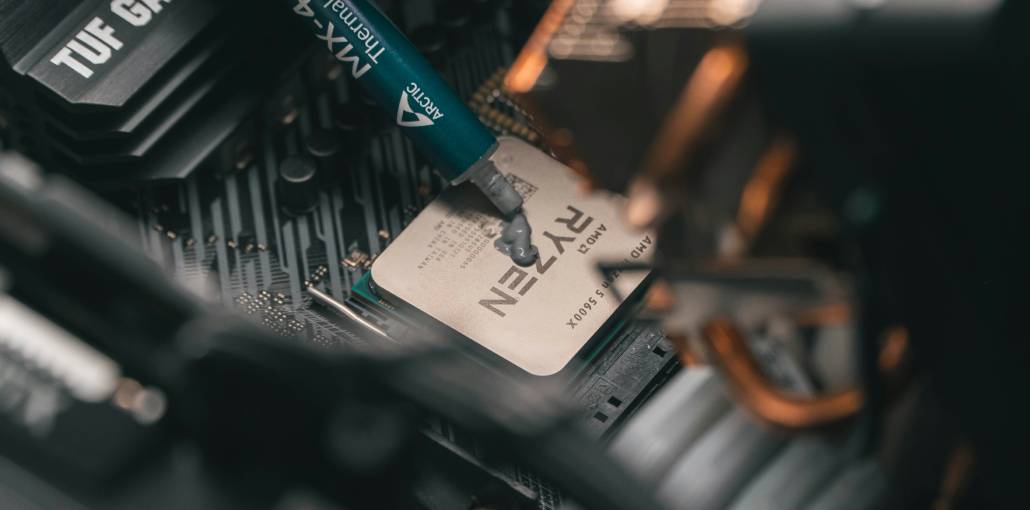
Choosing the right thermal paste is an important part of building or upgrading a PC, yet it is often overlooked. Beginners may rely on the thermal compound pre-applied to their CPU coolers, while experienced builders sometimes prefer aftermarket alternatives for improved cooling performance. Although pre-applied compounds are generally sufficient for everyday use, investing in a best thermal paste option can help improve heat transfer and maintain lower temperatures, particularly when running demanding applications or overclocking.
Over time, thermal paste can dry out and lose some of its ability to transfer heat efficiently. This can cause your CPU or GPU temperatures to rise, potentially resulting in thermal throttling and reduced performance. While modern hardware includes thermal protection mechanisms, maintaining an effective thermal interface is still important for long-term reliability. Before applying a new compound, make sure you know how to apply thermal paste correctly to achieve optimal results with the best thermal paste.
In this guide, we’ll explore the best thermal paste options available, compare their cooling performance, and explain what makes each product worth considering. We’ll also cover important factors such as thermal conductivity, application methods, and longevity to help you choose a good thermal compound for your setup.
Whether you’re upgrading your gaming PC, building a workstation, or looking for reliable CPU thermal paste, finding the right product can make a difference. Let’s explore our best thermal paste recommendations and which option offers the best performance, price, and ease of use.
Best Thermal Paste for CPU and GPU
1. Arctic Silver 5
Even in 2026, Arctic Silver 5 remains a popular choice for PC enthusiasts looking for a tried-and-tested thermal compound. Having used it across several PC builds, I’ve consistently found it reliable and have experienced no heat-related component failures, making it a best thermal paste option worth considering.
Its silver-based formula is designed to provide efficient heat transfer between the processor and cooler. For anyone searching for a dependable best thermal paste, Arctic Silver 5 remains a worthwhile option.
Testing
During our tests, Arctic Silver 5 delivered excellent results, ranking among the best-performing thermal compounds in our comparison. Even under sustained full CPU load, processor temperatures remained below 53°C (127°F), demonstrating its impressive cooling capabilities.
Pros
- High thermal conductivity rating of 8.9 W/mK.
- Competes well with newer thermal pastes.
- Easy to apply and beginner-friendly.
- Silver-based formula for efficient heat transfer.
- Suitable for extreme cooling setups.
Cons
- Requires several hours of curing to reach optimal performance.
Also read: 5 Best GPU Coolers for Your Graphics Card
2. Arctic MX-4
Arctic MX-4 is another excellent contender and one of the highest-rated options in our selection. Its combination of cooling performance, ease of application, and long-lasting formula makes it an appealing best thermal paste choice for different PC configurations.
Although slightly expensive, it comes in a generous 4g tube and offers a claimed lifespan of up to eight years. This makes it a practical long-term investment for anyone looking for reliable thermal paste for computers.
Testing
Our tests delivered impressive results, with Arctic MX-4 maintaining temperatures of just 57°C (134°F), even under full gaming load. Its consistent performance demonstrates why it remains a popular option among PC builders.
Pros
- Thermal conductivity rating of 8.5 W/mK.
- Affordable for the performance it delivers.
- Easy to spread and apply.
- Metal-free, electrically non-conductive formula.
- No settling time required.
- Minimal curing time.
Cons
- Not ideal for heavy overclocking.
3. Thermal Grizzly Hydronaut
Thermal Grizzly Hydronaut is a step up from the brand’s Aeronaut thermal paste and is designed with water-cooling systems in mind. However, it also works well with traditional air coolers, making it a versatile and best thermal paste choice for different PC builds.
Its cooling capabilities make it an attractive option for enthusiasts looking for the best thermal paste that can handle demanding workloads without compromising temperature performance.
Testing
Hydronaut outperformed Aeronaut in our tests, keeping CPU temperatures at a maximum of 54°C (129°F). It handled demanding gaming workloads with ease, delivering impressive and consistent cooling.
Pros
- Electrically non-conductive formula.
- Suitable for beginners exploring overclocking.
- Works with both air and water-cooling solutions.
Cons
- Relatively expensive compared to alternatives.
4. Thermal Grizzly Kryonaut
Another impressive offering from Thermal Grizzly is Kryonaut. Unlike some of the brand’s other products, it isn’t specifically designed for sub-zero cooling solutions. Instead, its name simply refers to low temperatures.
Regardless of the naming, Kryonaut is an excellent thermal compound that delivers impressive cooling performance. Thermal Grizzly also offers another high-performance product, Conductonaut, although it didn’t quite make the cut for this list.
For enthusiasts looking for the best thermal paste for CPUs, Kryonaut is certainly worth considering.
Testing
Thermal Grizzly continues to impress, with Kryonaut delivering even better results than its predecessor. During our tests, CPU temperatures peaked at just 53°C (127°F), making it one of the best thermal pastes in our comparison.
It could also be an excellent choice for GPUs, although we haven’t tested it on graphics cards.
Pros
- Excellent thermal conductivity of 12.5 W/mK.
- Electrically non-conductive formula.
- Includes a convenient application spreader.
- Suitable for extreme cooling and liquid nitrogen setups.
Cons
- Significantly more expensive than most alternatives.
Also read: GPU Fans Not Spinning? 11 Quick Ways to Fix the Problem
5. Thermal Grizzly Aeronaut
Thermal Grizzly takes us into the premium thermal paste category, with products that come at a slightly higher price. However, the brand is widely recognised for producing high-quality thermal compounds for demanding PC cooling applications.
Aeronaut is the entry-level best thermal paste option in Thermal Grizzly’s lineup. As its name suggests, it is primarily designed for air-cooled systems that use traditional heatsinks and fans.
If you’re searching for a reliable thermal cooling paste for a standard air-cooled gaming PC, Aeronaut is worth considering.
Testing
Aeronaut delivered impressive results in our tests, with temperatures never exceeding 57°C (134°F). It provides reliable cooling performance and is a solid choice for keeping your system cool with most standard air-cooling solutions.
Pros
- Electrically non-conductive formula.
- Manufactured by a reputable thermal paste brand.
- Includes a convenient application spreader.
- Suitable for standard air-cooling setups.
Cons
- Relatively expensive compared to other options.
6. Arctic Silver Ceramique 2
Developed by the same manufacturer behind Arctic Silver 5, Arctic Silver Ceramique uses a ceramic-based formula rather than silver.
Arctic Silver made a smart choice by offering a beginner-friendly, electrically non-conductive thermal compound. Its non-conductive properties also reduce the risk of short circuits if some paste accidentally spills over the edges during application.
This makes it a practical option for beginners who want a straightforward CPU thermal paste without worrying about electrical conductivity.
Testing
Although Arctic Silver Ceramique didn’t quite match its predecessor’s performance in our tests, it still delivered solid results during gaming. CPU temperatures remained below 61°C (141°F), keeping the processor within a comfortable range even during demanding gaming sessions.
Pros
- Affordable price.
- Electrically non-conductive formula.
- Manufacturer claims it will not dry out over time.
Cons
- No significant drawbacks noted.
7. Cooler Master High Performance Thermal Paste
Cooler Master is well known for PC cases and power supplies, but the company has also expanded its product lineup to include thermal pastes.
We tested Cooler Master’s High Performance thermal paste. Designed as an all-round cooling solution, it delivers decent results but falls slightly behind some other options on our list.
However, it includes a credit card-style spreader and application templates to help users apply the paste neatly and accurately without making a mess.
Testing
During our tests, Cooler Master High Performance thermal paste reached a maximum load temperature of around 63°C (145°F), making it the second-highest result on our list. Although slightly warmer than alternatives averaging around 61°C, it still delivers reliable cooling and can handle demanding gaming sessions.
Pros
- Electrically non-conductive formula.
- Affordable price point.
- Includes a spreader and application templates for easy, mess-free installation.
Cons
- No significant drawbacks noted.
8. Gelid Solutions GC-Extreme
Gelid Solutions was a relatively unfamiliar brand to us, but after receiving a recommendation for its thermal paste, we included it in our testing. The Gelid Solutions GC-Extreme delivered respectable results, holding its own against several well-known competitors on this list.
The GC-Extreme is non-corrosive, non-toxic, and requires no curing period. It also includes a convenient spreader, making application easier and helping ensure an even layer of thermal compound.
However, it comes in a larger tube, which increases the overall cost and may leave you with more paste than you actually need.
Testing
We were pleasantly surprised by the GC-Extreme’s performance, as it maintained temperatures of just 61°C (141°F) under full gaming load. These results make it a solid option.
Pros
- Includes a convenient application spreader.
- Electrically non-conductive formula.
- Requires no curing time.
- Non-corrosive and non-toxic.
Cons
- Relatively expensive compared to competitors.
- Larger tube may be unnecessary for occasional users.
Also read: How to Stop Laptop From Overheating
9. Prolimatech PK-3
Prolimatech may not be a familiar name, but its products are still worth considering. Featuring a non-conductive nano-aluminium compound, the PK-3 delivered impressive results during our testing.
For anyone looking beyond the more established brands, this thermal compound offers competitive cooling performance and is worth adding to your shortlist.
Testing
The Prolimatech PK-3 delivered some of the best thermal pastes in our tests, reaching just 53°C (127°F) under load. Its impressive cooling performance makes it an excellent choice for gaming PCs and demanding workloads.
Pros
- Excellent thermal performance.
- Non-conductive nano-aluminium formula.
- Suitable for demanding gaming setups.
- Delivers competitive cooling results.
Cons
- Less widely available than popular brands.
- Relatively lesser-known manufacturer.
Compare the Best Thermal Pastes for Your PC
| Thermal Paste | Thermal Conductivity | Tested Temperature | Best For |
|---|---|---|---|
| Arctic Silver 5 | 8.9 W/mK | Below 53°C | Overall performance |
| Arctic MX-4 | 8.5 W/mK | 57°C | Budget-friendly builds |
| Thermal Grizzly Hydronaut | Not specified | 54°C | Water cooling |
| Thermal Grizzly Kryonaut | 12.5 W/mK | 53°C | High-performance cooling |
| Thermal Grizzly Aeronaut | Not specified | 57°C | Air cooling |
| Arctic Silver Ceramique 2 | Not specified | Below 61°C | Beginner-friendly use |
| Cooler Master High Performance | Not specified | 63°C | Everyday PC use |
| Gelid Solutions GC-Extreme | Not specified | 61°C | Gaming PCs |
| Prolimatech PK-3 | Not specified | 53°C | Demanding workloads |
How We Pick the Best Thermal Paste
Choosing the right thermal paste requires careful consideration to ensure you get a reliable product that meets your cooling needs. We follow a thorough selection process to identify the most promising options available.
- Staying Up to Date: We track the latest products, market trends, and developments to ensure our recommendations are relevant and updated.
- Thorough Research: The PC hardware market can be overwhelming, with countless products and conflicting information. We research each option carefully to separate reliable products from the rest.
- Selecting the Best: After compiling a list of potential candidates, we compare their specifications, features, and performance to identify the most promising thermal pastes.
Once we’ve finalised our shortlist, we buy the right thermal paste and put it through hands-on testing to evaluate its real-world cooling performance. This helps us identify the best thermal compound for different budgets, cooling configurations, and usage requirements.
Our Final Recommendations for the Best Thermal Paste
Choosing the best thermal paste depends on your CPU or GPU, cooling setup, and budget. Options like Arctic Silver 5, Arctic MX-4, and Thermal Grizzly Kryonaut offer reliable cooling performance and are worth considering for different PC builds.
Personally, I’ve used Arctic Silver 5 across several PC builds, including my current setup, and it has consistently delivered excellent results. Arctic MX-4 and Thermal Grizzly Kryonaut are also worth considering if you’re looking for alternatives.
Ultimately, the best thermal paste is the one that meets your cooling requirements and delivers the right balance of performance, reliability, and value. Which thermal paste do you use in your PC?
FAQs: Best Thermal Pastes
What is the best thermal paste for CPUs?
Arctic Silver 5, Arctic MX-4, and Thermal Grizzly Kryonaut are three popular options. The right choice depends on your cooling requirements, budget, and whether you plan to overclock.
How often should I replace CPU thermal paste?
Thermal paste does not need to be replaced frequently. Check your CPU temperatures and consider reapplying it if temperatures increase unexpectedly or the cooler is removed.
Does expensive thermal paste provide better cooling?
Not necessarily. A higher price does not always guarantee better performance. Some affordable thermal pastes deliver cooling results comparable to premium alternatives.
Is electrically conductive thermal paste safe to use?
Electrically conductive compounds require extra care during application because accidental contact with nearby components can cause short circuits. Beginners may prefer electrically non-conductive options.









Leave a comment