

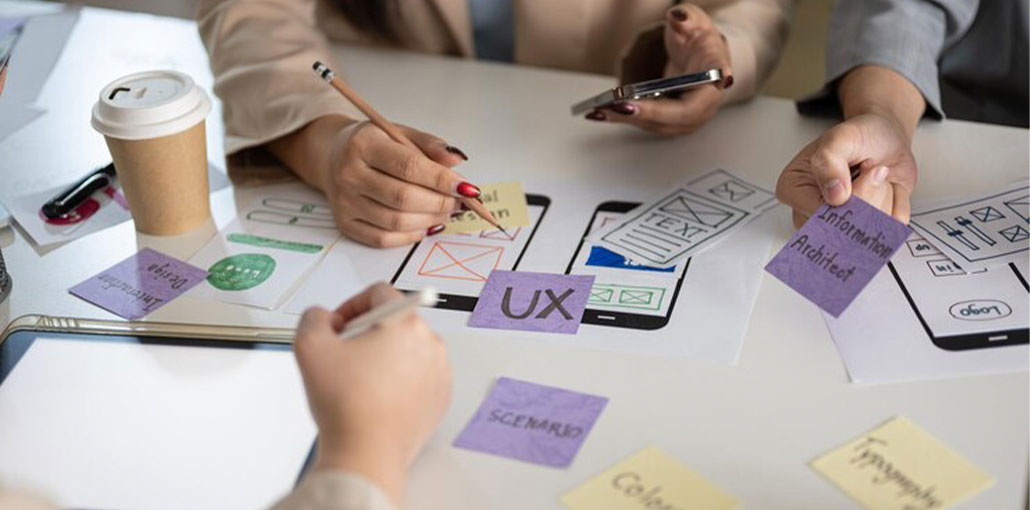
A lot of conversations about design stop at visuals. Clean layouts. Nice interactions. Elegant type.
That’s a superficial view. Design that matters — the work that drives user behavior, supports business goals, and grows products over time — lives deeper.
When teams hire top ux design agencies, they’re usually looking for someone who can make the product feel better. That’s part of it. The part that’s easy to spot.
But what separates the strongest partners from the rest isn’t just polish. It’s how they shape decisions, frame problems, and help internal teams think more clearly about users and outcomes.
Let’s unpack what that actually looks like in practice—especially for product teams navigating ambiguity, growth, and real-world constraints.
UX work starts before any screens are drawn
Most strong engagements begin with questions, not mockups.
Not:
- What should the homepage look like?
- What color palette should we use?
But:
- What are we trying to achieve with this experience?
- Who are we designing for tomorrow—not just today?
- What’s the real friction users experience, even if they don’t say it directly?
Great partners treat research and discovery as tools for framing, not phases to check off. They synthesize patterns, not just collect data.
That’s why when teams evaluate user experience design services, they often talk about “clarity” rather than “outputs.”
Clarity about direction.
Clarity about trade-offs.
Clarity about what success looks like before pixels are even discussed.
Also read: 6 UX Keys to Optimize Before You Start the Customer Journey
Design without context is decoration
Good visuals can make an interface easier to look at. Great design makes it easier to use.
Top design teams understand that appealing visuals are not the outcome. They’re the byproduct of solving a problem well.
This means:
- Not designing features just because competitors have them.
- Not adding elements just because they’re trendy.
- Not optimizing flows without understanding real user behavior.
Instead, the focus is on matching design to needs, not needs to design.
That’s a mindset shift — and it’s one that the top design agencies new york tend to internalize because they see variation across many products and categories.
They’ve learned that good design isn’t a universal recipe. It’s a conversation between product goals, constraints, and user expectations.
Design decisions should reduce uncertainty, not create it
The best UX partners make ambiguity easier to manage.
They don’t eliminate uncertainty — no one can. But they make it visible early so teams can decide consciously rather than reactively.
This shows up in work that:
- Surfaces risks alongside recommendations
- Explains why certain elements are placed where they are
- Outlines alternatives that were considered but discarded
When uncertainty is made explicit, organizations can budget for it, plan around it, and avoid last-minute firefighting.
That’s what separates execution partners from strategic contributors.
Collaboration isn’t a buzzword — it’s a practice
Design rarely lives in isolation. It sits between product, engineering, marketing, and leadership.
Too often, agencies claim they’re collaborative without actually operationalizing it.
The difference is simple:
- Lip service: “We love co-creation! Let’s workshop soon.”
- Practice: Clear roles. Shared decision logs. Defined points of accountability. Design decisions that stakeholders understand because they participated.
When people feel part of the decision, they’re more likely to defend it — even if it wasn’t their first choice.
This is a signature behavior of the strongest user experience design services — they don’t just hand over files. They help teams integrate decisions.
Complexity isn’t avoided — it’s made manageable
As products scale, complexity isn’t inherently bad. What’s bad is unmanaged complexity.
Interesting guidance from strong UX teams isn’t simplistic:
- It doesn’t pretend every problem has a neat solution.
- It doesn’t oversimplify nuances that matter to users or business logic.
Instead, it:
- Breaks complexity into meaningful layers
- Highlights where trade-offs live
- Suggests ways to monitor and iterate — not just ship
Design that handles complexity intelligently becomes part of the product’s long-term stability.
It doesn’t just look good — it works consistently.
UX partners shouldn’t be afraid to disagree
Clients don’t always know what’s best. That’s true.
What’s also true is that many agencies avoid honest disagreement because it feels uncomfortable.
But the best UX work comes when someone speaks up thoughtfully — with reasoning, evidence, and empathy.
The strongest top ux design agencies balance:
- Respect for a team’s domain knowledge
- Courage to question assumptions
- Humility that recognizes the team ultimately owns the decision
Disagreement isn’t antagonistic. It’s clarifying.
And in mature product environments, it’s a sign of respect for quality, not ego.
Design isn’t just about users — it’s about people who decide
One of the less-talked-about parts of UX is decision adoption.
Great design can be ignored if the organization doesn’t understand the reasoning behind it.
That’s why design delivery has shifted from final deliverables to shared decisions.
In other words:
- Good UX looks nice
- Better UX makes sense to stakeholders
- Best UX gets adopted and defended
That’s not accidental. It’s intentional communication embedded in every step of the process.
UX and product strategy are more intertwined than many teams admit
Design does not exist in a vacuum.
When properly integrated, design influences:
- Roadmap prioritization
- Technical feasibility discussions
- Go-to-market timing
- Customer support strategy
This isn’t about scope creep. It’s about integration.
Strong teams bring a product mindset to design — and strong product teams welcome that.
That’s why partnerships with top design agencies new york are often described as transformational rather than transactional. They don’t just improve a page — they reshape how decisions get made.
Also read: How Much Does It Really Cost to Build a Digital Product?
Design outcomes are measurable — when defined responsibly
A common mistake teams make is defining UX success as subjective feelings:
- “Feels intuitive.”
- “Looks modern.”
- “Users like it.”
These are signals, not outcomes.
The strongest UX engagements tie design to measurable outcomes:
- Reduced task completion time
- Higher conversion at specific flows
- Improved retention in targeted segments
This measurement link gives teams clarity and confidence — and makes design a business conversation, not just a creative one.
UX continues after launch
Design doesn’t stop when code ships.
User behavior reveals surprises. Metrics evolve. New opportunities emerge.
Great UX partners plan for this. Not as an afterthought, but as part of a responsible engagement.
They build mechanisms for iteration:
- Monitoring changes
- Collecting qualitative insights
- Indicating when assumptions need revisiting
This ongoing awareness turns launches into learning cycles, not endpoints.
The real value of the best UX work
At its core, good UX is less about aesthetics and more about intelligence — contextual, strategic, and human.
When teams elevate design conversations from decoration to decision, the organization benefits at every level:
- Users feel understood
- Teams make better decisions
- Products behave more predictably
- Outcomes become measurable
That’s why investing in the right partners — those with the judgment to clarify problems and the discipline to solve them — pays dividends long after the first screens are signed off.








Leave a comment