

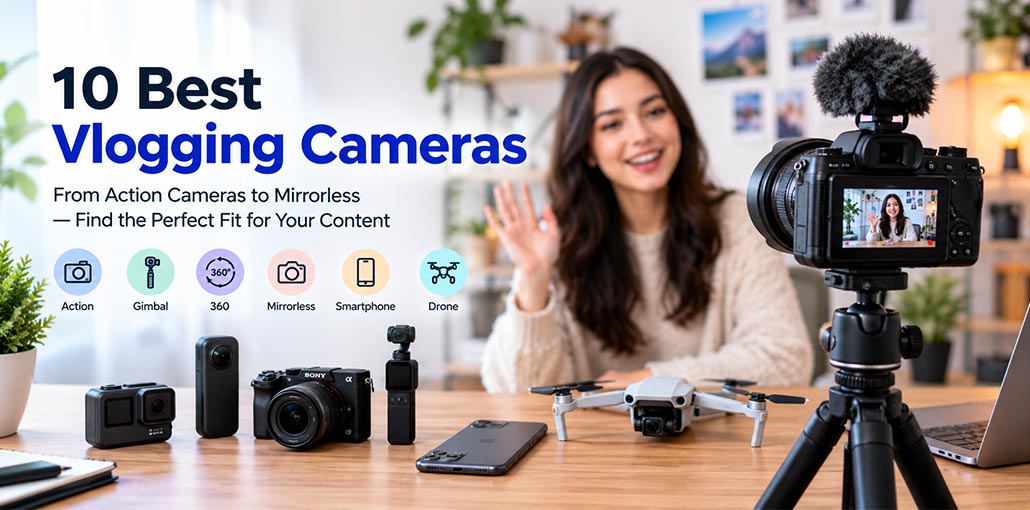
Choosing the right vlogging camera depends on your content, budget, and shooting style. Travel creators may prefer lightweight stabilization, while professional YouTubers may need interchangeable lenses and better low-light performance. We compared 10 popular cameras across action, gimbal, 360, mirrorless, smartphone, and drone categories to help you find the best vlogging camera.
Quick Comparison of the Best Vlogging Cameras
| Camera | Type | Best For |
|---|---|---|
| DJI Osmo Action 6 | Action Camera | Travel & adventure vlogging |
| Insta360 Luna Ultra | Gimbal Camera | Premium stabilized vlogging |
| Insta360 X5 | 360° Camera | 360° travel & action content |
| Fujifilm X-S20 | Mirrorless | YouTube & cinematic content |
| Sony ZV-E1 | Full-Frame Mirrorless | Professional vlogging |
| Canon EOS R50 V | Mirrorless | Beginners & YouTube |
| DJI Osmo Pocket 3 | Gimbal Camera | Walking & travel vlogs |
| DJI Mini 3 | Drone | Aerial travel footage |
| iPhone 17 Pro Max | Smartphone | Everyday & mobile vlogging |
| Sony ZV-1M2 | Compact Camera | Everyday YouTube & travel |
10 Best Vlogging Cameras to Start Your Vlogging Journey
1. DJI Osmo Action 6 – Best Action Camera for Vlogging
The DJI Osmo Action 6 is an excellent 4K camera for vlogging, especially for travel, sports, hiking, and outdoor content. Its rugged body, wide field of view, strong stabilization, and compact design make it easy to use while moving. It is the best vlogging camera for creators who need durability without carrying a larger setup.
Key Specifications
- Sensor: 1/1.1-inch CMOS
- Maximum video: 8K/30fps
- 4K: Up to 4K/120fps
- Lens: 155° FOV
- Stabilization: RockSteady 3.0+, HorizonSteady
- Weight: 149g
- Waterproof: Up to 20m
- Storage: 64GB + microSD up to 1TB
- Microphones: 3
Pros
- Compact and lightweight
- Excellent stabilization
- Rugged and waterproof
- 4K/120fps slow motion
- Built-in storage
Cons
- Fixed lens
- Smaller sensor
- Less control than mirrorless cameras
Verdict: The DJI Osmo Action 6 is one of the best vlogging cameras for outdoor creators who want a compact and rugged setup.
Also read: What Is the Best Video Editing Software for Beginners? 10 Top Picks
2. Insta360 Luna Ultra – Best Premium Gimbal-Stabilized Vlogging Camera
The Insta360 Luna Ultra targets creators who want premium stabilization without carrying a separate gimbal. Its dual-camera design combines a large main sensor with a telephoto option, while the detachable touchscreen helps solo vloggers monitor shots. It suits lifestyle creators who want flexible framing and advanced video features.
For vloggers who want stabilized footage while keeping their setup relatively compact, it can function as a premium or best vlogging camera option.
Key Specifications
- Main sensor: 1-inch
- Telephoto sensor: 1/1.3-inch
- Main lens: 20mm equivalent, f/1.8
- Telephoto: 60mm equivalent, f/2.0
- Maximum video: 8K/30fps
- 4K: Up to 120fps
- Stabilization: 3-axis mechanical gimbal
- Screen: 2-inch detachable OLED
- Storage: 47GB + microSD
- Weight: Approx. 233g
Pros
- Excellent mechanical stabilization
- Dual-lens flexibility
- 8K recording
- Large main sensor
- Useful for solo creators
Cons
- Expensive
- Not waterproof
- More advanced for beginners
Verdict: Luna Ultra is a strong best camera for video blogging option for creators who prioritize premium stabilized footage.
3. Insta360 X5 – Best 360 Camera for Vlogs
The Insta360 X5 is designed for creators who want 360-degree footage instead of traditional front-facing video. You can reframe shots during editing, making it useful for travel, cycling, adventure, and social content. Its stabilization and waterproof design also make it suitable for creators who frequently shoot outdoors.
For creators looking beyond traditional best vlogging cameras, the Insta360 X5 offers a unique way to capture immersive 360° footage and create engaging content from every angle.
Key Specifications
- Sensor: 1/1.28-inch
- Aperture: f/2.0
- 360° video: Up to 8K/30fps
- Single-lens video: Up to 4K/60fps
- Photos: Up to 72MP
- Stabilization: FlowState
- Horizon Lock: Yes
- Waterproof: Up to 15m
- Weight: Approx. 200g
- Battery: 2400mAh
Pros
- 8K 360° video
- Creative reframing
- Strong stabilization
- Replaceable lenses
- Waterproof
Cons
- More editing required
- Large files
- Less traditional shooting experience
Verdict: The Insta360 X5 is one of the best cameras for vloggers who want creative 360-degree footage and flexible reframing.
4. Fujifilm X-S20 – Best Midrange Mirrorless Camera for Vloggers
The Fujifilm X-S20 is a versatile mirrorless camera for creators who want excellent image quality and interchangeable lenses. Its APS-C sensor, IBIS, 10-bit recording, and vari-angle screen make it suitable for YouTube, travel, reviews, and cinematic content. It is also a system that can grow with a creator’s experience.
Key Specifications
- Sensor: APS-C X-Trans CMOS 4
- Resolution: 26.1MP
- Mount: Fujifilm X
- Maximum video: 6.2K/30fps
- 4K: Up to 60fps
- Color: 4:2:2 10-bit
- Stabilization: 5-axis IBIS
- IBIS: Up to 7 stops
- Screen: 180° vari-angle
- Vlog mode: Yes
Pros
- Excellent image quality
- Interchangeable lenses
- Strong stabilization
- 10-bit video
- 6.2K recording
Cons
- Larger setup
- Lenses add cost
- Requires some camera knowledge
Verdict: The Fujifilm X-S20 is a flexible best vlogging camera for creators who want a mirrorless system with room to grow.
5. Sony ZV-E1 – Best Full-Frame Vlogging Camera
The Sony ZV-E1 is a strong choice for creators who want to find the best vlogging camera with full-frame image quality in a compact body. Its sensor performs especially well in low light and creates a natural shallow depth of field. It’s ideal for professional YouTube channels, cinematic travel videos, interviews, and commercial content rather than basic everyday vlogging.
Key Specifications
- Sensor: Full-frame Exmor R CMOS
- Resolution: Approx. 12.1MP
- Mount: Sony E-mount
- Video: 4K/60p
- Recording: 10-bit
- Color: 4:2:2
- Screen: Vari-angle LCD
- Mic: 3.5mm input
- Headphone: 3.5mm output
- Weight: Approx. 399g
Pros
- Excellent full-frame quality
- Strong low-light performance
- Excellent autofocus
- Professional video features
- Good audio connectivity
Cons
- Expensive
- Lenses add cost
- Less pocketable
- More than beginners need
Verdict: The Sony ZV-E1 is one of the strongest choices for the best camera for vlogging when professional image quality is the priority.
6. Canon EOS R50 V – Best Entry-Level Vlogging Camera
The Canon EOS R50 V is for beginners moving from smartphones to dedicated cameras. Its APS-C sensor and RF mount provide better image quality and lens flexibility, while the vari-angle display makes self-recording easier. It is suitable for YouTube beginners, product reviewers, lifestyle creators, and anyone seeking an affordable vlogging camera.
Key Specifications
- Sensor: APS-C CMOS
- Resolution: Approx. 24MP
- Processor: DIGIC X
- Mount: Canon RF/RF-S
- Video: 4K
- Color: 10-bit options
- Screen: 3-inch vari-angle touchscreen
- Mic: 3.5mm input
- Headphone: Yes
- Storage: SD card
Pros
- Beginner-friendly
- Interchangeable lenses
- APS-C sensor
- Vari-angle screen
- Good audio connectivity
Cons
- No IBIS
- Lenses cost extra
- Larger than pocket cameras
Verdict: For beginners looking for an affordable vlogging camera, the Canon EOS R50 V offers a strong balance of usability, quality, and upgrade potential. It can be the best vlogging camera for new creators entering interchangeable-lens systems.
7. DJI Osmo Pocket 3 – Best Affordable Gimbal-Stabilized Vlog Camera
The DJI Osmo Pocket 3 combines a 1-inch sensor with a three-axis mechanical gimbal in a very small body. This makes it particularly useful for walking videos, travel, and lifestyle content. Its rotating touchscreen also supports both horizontal and vertical shooting, making it one of the most convenient options for mobile creators seeking the best vlogging camera for everyday use.
Key Specifications
- Sensor: 1-inch CMOS
- Lens: 20mm equivalent
- Aperture: f/2.0
- Video: Up to 4K/60fps
- Slow motion: 4K/120fps
- Stabilization: 3-axis mechanical gimbal
- Screen: 2-inch touchscreen
- Weight: 179g
- Microphones: 3
- Storage: microSD up to 1TB
Pros
- Very compact
- Excellent stabilization
- 1-inch sensor
- Easy to use
- Great for walking videos
Cons
- Fixed lens
- Not waterproof
- Less flexibility than mirrorless
Verdict: The DJI Osmo Pocket 3 is arguably one of the best compact cameras for vlogging for creators who prioritize portability and smooth footage.
8. DJI Mini 3 – Best Drone for Vloggers
The DJI Mini 3 is a useful drone camera for travel vloggers who need cinematic aerial footage. It can capture landscapes, buildings, roads, beaches, and destinations from unique perspectives. Its compact size makes it convenient for travel, although creators must follow local drone regulations and operate it safely. For aerial content, it complements the best vlogging camera in your main setup.
Key Specifications
- Sensor: 1/1.3-inch CMOS
- Resolution: 48MP
- Lens: 24mm equivalent
- Aperture: f/1.7
- Video: 4K/30fps
- Stabilization: 3-axis gimbal
- Weight: 248g standard configuration
- QuickShots: Dronie, Helix, Rocket, Circle, Boomerang
- Format: MP4/H.264
Pros
- Excellent aerial footage
- Compact and lightweight
- 4K video
- Strong stabilization
- Great for travel
Cons
- Cannot replace a handheld camera
- Requires legal operation
- Weather affects flying
- Extra batteries can help
Verdict: The DJI Mini 3 is an excellent companion for vloggers who want aerial footage alongside their main vlogging camera.
9. iPhone 17 Pro Max – Best Phone Camera for Vlogging
The iPhone 17 Pro Max is an extremely convenient option for video blogging because it combines recording, editing, and publishing in one device. Its advanced cameras, stabilization, Dolby Vision, ProRes, Apple Log 2, and external-recording support make it considerably more capable than a basic smartphone setup. For many creators, it can function as a best vlogging camera without extra paying.
Key Specifications
- Camera system: 48MP Fusion cameras
- Front camera: 18MP Center Stage
- Video: Up to 4K Dolby Vision/120fps
- ProRes: Up to 4K/120fps with external recording
- Formats: HEVC, H.264, ProRes, ProRes RAW
- Stabilization: Sensor-shift optical
- Audio: Four studio-quality microphones
- Features: Apple Log 2, Genlock, Dual Capture
Pros
- Always easy to carry
- Excellent stabilization
- Strong front camera
- Easy editing and uploading
- Professional video formats
Cons
- Less lens flexibility
- ProRes uses significant storage
- Smartphone ergonomics
- Accessories may be needed
Verdict: The iPhone 17 Pro Max is a convenient alternative to a dedicated best vlogging camera for creators who want high-quality video, easy editing, and fast publishing on the go.
Also read: Why Is My iPhone Camera Not Working and How Do I Fix It?
10. Sony ZV-1M2 – Best Compact Vlogging Camera
The Sony ZV-1M2 is designed for creators who want a dedicated camera without carrying a large mirrorless setup. Its 18–50mm equivalent lens is especially useful for selfie-style recording, while the 1-inch sensor, fast autofocus, and vari-angle screen suit YouTube, lifestyle, product, and travel content.
Key Specifications
- Sensor: 1-inch Exmor RS CMOS
- Resolution: Approx. 20.1MP
- Lens: 18–50mm equivalent
- Aperture: f/1.8–f/4.0
- Video: 4K/30fps
- Stabilization: Electronic Active
- Screen: 3-inch vari-angle touchscreen
- Microphone: Built-in stereo
- External mic: 3.5mm
- Weight: Approx. 292g
- Autofocus: Fast Hybrid AF
Pros
- Compact design
- Excellent autofocus
- Useful 18mm wide angle
- Good image quality
- Vari-angle screen
- Easy to carry
Cons
- Fixed lens
- Smaller sensor than APS-C/full-frame
- Electronic stabilization
- Limited upgrade path
Verdict: The Sony ZV-1M2 is a strong camera for vlogging for creators who want dedicated-camera quality in a compact body. It is also a practical best vlogging camera for everyday YouTube and travel content.
How to Choose the Best Vlogging Camera
The best vlogging camera depends on your content and shooting environment. For travel and adventure, the DJI Osmo Action 6 is compact and rugged, while the DJI Osmo Pocket 3 is excellent for walking videos. For creators who want a simple everyday setup, choosing the best vlogging camera also means considering weight, stabilization, battery life, and audio.
For a compact vlogging camera, the Sony ZV-1M2 is a practical choice. The Insta360 X5 suits creators who want 360-degree footage, while the Fujifilm X-S20 and Canon EOS R50 V offer interchangeable-lens flexibility.
Professional creators can consider the Sony ZV-E1, while the iPhone 17 Pro Max is ideal for convenience. If you need a 4K camera for vlogging, options such as the Action 6 and Pocket 3 provide strong video performance in portable designs.
Final Thoughts
Finding the best vlogging camera is not just about specs—it’s about finding the camera that fits your style, budget, and creativity. Whether you’re starting with the Canon EOS R50 V, traveling with the DJI Osmo Pocket 3, or capturing adventures with the Action 6, the most important step is to start. Pick your camera, hit record, and start sharing your story with the world.
FAQs: Best Vlogging Cameras
What camera is best for beginners?
The Canon EOS R50 V is a good option for beginners because it offers an easy-to-use design, interchangeable lenses, a vari-angle screen, and good video quality.
Is a smartphone good enough for vlogging?
Yes. A modern smartphone such as the iPhone 17 Pro Max can produce high-quality video and is particularly convenient for creators who want to record, edit, and publish from one device.
How much should I spend on a vlogging camera?
Your budget should match your content needs. Beginners can start with a smartphone or affordable compact camera, while creators who want interchangeable lenses and professional video features may benefit from investing in a mirrorless system.
What should I look for in the best vlogging camera?
Look for reliable autofocus, good stabilization, a vari-angle or flip screen, quality microphone support, strong battery life, and good video quality. Sensor size and lens flexibility are also important when image quality is a priority.





Leave a comment