

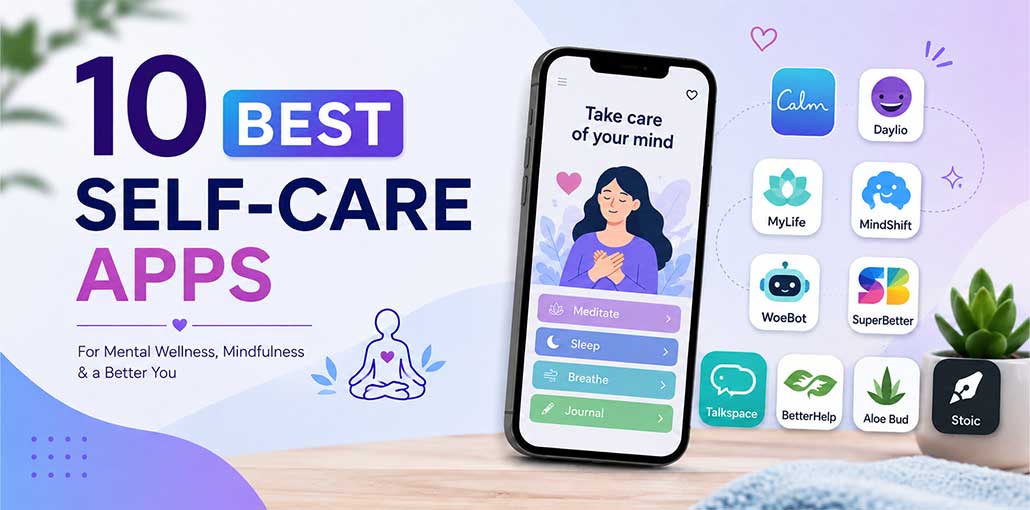
I’m sure you know many apps can help you learn self care practices. But which self care apps are the best? Which are free and which are paid?
You’re lucky! I’ve included some top self care apps in this article. Some are free, some use a “freemium” model, and others are paid.
So, buckle up, and I’ll provide all the information you need! (By the way, all of these self care apps for mental health are compatible with both iPhone and Android, except for one.)
Free Self-Care Apps
These are free self care apps, or most of the content is completely free. This means you can access most of the app and its capabilities without paying.
1. Daylio
Daylio is a free self care app that you can use to keep an organizer and monitor your mood. What I really like about Daylio is how easy it is. You can add many features to the application. You can use it as a diary and track your mood. It also gives you information and statistics about your mood. It’s amazing!! I love that it can be used as a self care tracking device.
Pros
- Easy and beginner-friendly
- Great for mood tracking and journaling
- Helps identify mood and habit patterns
- Free version available
Cons
- Advanced features require payment
- Mainly focused on tracking rather than guided support
Also read: Top 10 Mobile Apps to Improve Your Daily Routine
2. MyLife
The MyLife app was designed to help people cope with anxiety. The app was previously known as Stop, Breathe, and Think. The MyLife app lets you assess how you’re feeling. It also provides countless activities, such as journaling and meditation exercises, to help your efforts to get better.
Pros
- Offers meditation and breathing exercises
- Helps users check in with their emotions
- Simple and calming interface
- Useful for stress and anxiety management
Cons
- Some content may require a subscription
- Less suitable for people looking for professional therapy
3. WoeBot
WoeBot acts as a good companion or even a therapist in your pocket. The WoeBot developers created a solution to help with mental health accessibility. With WoeBot, you can access CBT (cognitive-behavioral therapy) based exercises and support with the cutest AI bot. It’s probably one of the top self care apps for anxiety and depression.
Pros
- AI-based conversational support
- Includes CBT-based exercises
- Available anytime
- Easy to use for everyday stress and anxiety
Cons
- AI support cannot replace a licensed therapist
- Some features require payment
- Responses may not always feel personalized enough
4. MindShift
MindShift is a free mental health application developed in collaboration with Anxiety Canada that uses CBT (cognitive behavioral therapy) methods to help with relaxation and build better coping skills. This app focuses specifically on panic, worry, and social anxiety. It also helps with perfectionism and reduces anxiety. I’ve used this app for two years. I first started using it out of stress over romantic relationships.
Pros
- Free to use
- Based on CBT techniques
- Helpful for anxiety, worry, and panic
- Includes relaxation and coping tools
Cons
- Mainly focused on anxiety-related concerns
- May feel structured or repetitive for some users
- Not a substitute for professional treatment
5. SuperBetter
If you enjoy playing video games, SuperBetter can be for you. SuperBetter is a mental health app that was developed by a game designer who wanted to help people build resilience and success. The app was studied at Ohio State University and the University of Pennsylvania, and they discovered that it increased optimism and decreased anxiety. There’s an update, but the first version is free to download.
Pros
- Fun, game-like approach
- Encourages positive habits and resilience
- Makes self-care more interactive
- Suitable for people who enjoy challenges and games
Cons
- Gamified approach may not appeal to everyone
- Some features or versions may require payment
- Less focused on traditional meditation or journaling
Paid and Freemium Self Care Apps
With these self care apps, you’ll need to pay monthly or annually to access most features. But they offer free features you can use by downloading the app and signing in.
6. Calm
Calm is one of the most well-known self care apps. I’ve used different versions of the application for a few years. At one point, it was totally free. Today, you can try the app for free during a seven-day trial. After that, it is a Premium Membership that includes relaxation, nature sounds, music, and more.
Pros
- Large library of meditations
- Includes sleep stories, music, and relaxing sounds
- Attractive and easy-to-use interface
- Useful for relaxation and sleep routines
Cons
- Many features require a Premium subscription
- Can be expensive compared with free alternatives
- Some users may find the large content library overwhelming
7. TalkSpace
Talkspace is a therapy app. With Talkspace, you’ll have 24-hour access to a licensed mental health professional. It’s a text-based platform, which means send text messages directly to your counselor, but other options are available for phone or video chat. Their subscriptions start at $99/week. I’ve tried both Talkspace and the following app (BetterHelp) at various times in my life to get therapy.
Pros
- Provides access to licensed therapists
- Supports messaging and live sessions
- Convenient for online therapy
- Useful for people who prefer remote care
Cons
- More expensive than typical self care apps
- Requires a paid plan
- Availability and pricing vary by location and plan
8. BetterHelp
BetterHelp is different from other self care apps on this list because it focuses on online therapy with licensed therapists rather than only self-guided exercises. Users can communicate through messaging and arrange live sessions by chat, phone, or video. Pricing varies by location and other factors.
Pros
- Access to licensed therapists
- Offers messaging and live therapy sessions
- Convenient for people who prefer online counseling
- Can be used from home
Cons
- Requires a paid subscription
- Pricing varies by location and plan
- Finding the right therapist may take time
Also read: Best 7 Meditation Apps for Parents
9. Aloe Bud
Aloe Bud is designed around gentle reminders for everyday needs such as hydration, rest, movement, and other small acts of self-care. Its simple approach makes it suitable for people who want encouragement without a complicated dashboard.
Pros
- Simple and gentle approach to self-care
- Provides reminders for everyday needs
- Easy to use
- Good for building small self-care habits
Cons
- Fewer advanced features than some competitors
- May be too simple for users wanting detailed tracking
- Pricing and available features can vary by platform
10. Stoic
Stoic is a journaling and mindfulness-focused app designed to encourage reflection and emotional awareness. It can appeal to users who prefer a structured, private journaling routine rather than a social or highly gamified experience.
Pros
- Excellent for journaling and reflection
- Provides structured prompts and exercises
- Encourages mindfulness and emotional awareness
- Suitable for people who prefer private self-reflection
Cons
- Some advanced features require payment
- Primarily focused on journaling and mindfulness
- May not be ideal for users looking for therapy or direct professional support
Best Self Care Apps at a Glance
| App | Best For | Pricing | Key Feature | Platform |
|---|---|---|---|---|
| Daylio | Mood tracking & journaling | Free + Premium | Mood and habit tracking | iPhone & Android |
| MyLife | Stress & relaxation | Free + Premium | Meditation and emotional check-ins | iPhone & Android |
| Wysa | Anxiety & emotional support | Free + Premium | AI-based support and CBT exercises | iPhone & Android |
| MindShift CBT | Anxiety management | Free | CBT-based tools | iPhone & Android |
| SuperBetter | Building resilience | Free + Premium | Game-based self-care activities | iPhone & Android |
| Calm | Meditation & sleep | Free trial + Premium | Meditation, sleep stories & sounds | iPhone & Android |
| Talkspace | Online therapy | Paid | Licensed therapist access | iPhone & Android |
| BetterHelp | Online counseling | Paid | Messaging, phone & video therapy | iPhone & Android |
| Aloe Bud | Daily self-care | Free + Paid | Gentle self-care reminders | iPhone & Android |
| Stoic | Journaling & mindfulness | Free + Premium | Guided journaling & reflection | iPhone & Android |
Final Thoughts
Choosing the best self care apps depends on your personal needs and goals. Whether you want mood tracking, meditation, journaling, anxiety support, or online therapy, these apps can make self care easier, more accessible, and a regular part of your daily routine.
FAQs: Self Care Apps
What are the best self care apps?
Some of the best apps for self care include Daylio, MindShift CBT, Wysa, Calm, Stoic, and SuperBetter. The right app depends on whether you want mood tracking, meditation, journaling, anxiety support, or other self-care tools.
Are self care apps a replacement for therapy?
No. Self care apps can support healthy habits and provide self-guided exercises, but they should not replace professional mental health care when it is needed.
Can self care apps help with stress?
Yes. Meditation, breathing exercises, journaling, mood tracking, and relaxation tools available in many self-care apps may help you manage everyday stress.
What should I look for in a self-care app?
Look for features that match your needs, such as mood tracking, meditation, journaling, breathing exercises, habit reminders, sleep support, or professional therapy.








Leave a comment