

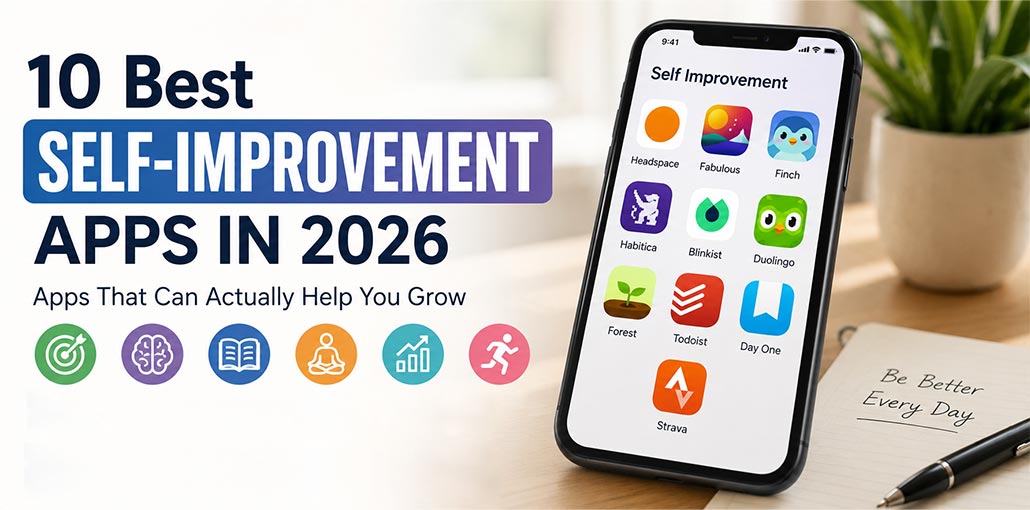
Self-improvement may seem simple at first, until you try to stick to it. You decide to read more books or exercise regularly, stop wasting time on your phone, or create a morning routine. A busy week takes over, motivation disappears, and all plans go out the window.
This is where the right app can be surprisingly useful.
No need for 20 different tools and a complex productivity system. One good app that fits naturally into your routine can help you stay consistent, track progress easily, and make small changes without overwhelming you.
I reviewed various types of self improvement apps for habits, mindfulness, productivity, learning, focus, journaling, and fitness goals. Here is my list of the best apps for self improvement, each app chosen for a different personal-growth goal.
How We Chose the Best Apps for Self Improvement
There are various apps on the market that promise to make us more productive, disciplined, focused, or motivated – but simply downloading an app and actually using it can be two very different experiences.
For my list, I selected applications with clear purposes that could fit seamlessly into daily routines.
I looked at things such as:
- How easy the app is to use
- Whether the free version is useful
- How well it supports consistency
- Whether it offers meaningful progress tracking
- How much value it provides beyond simple reminders
- Whether it works for beginners
- What type of personal-growth goal it is best suited for
I also wanted some variety. Someone trying to meditate needs a very different tool from someone trying to manage their tasks or learn a new language.
So instead of ranking apps simply by popularity, these best apps for self improvement are organized around what you actually want to improve.
Also read: Top 10 Mobile Apps to Improve Your Daily Routine
10 Best Apps for Self Improvement and Personal Growth
1. Headspace — Best for Meditation and Mindfulness
Headspace makes meditation easier for beginners with guided sessions covering mindfulness, relaxation, sleep, and focus. Short sessions also make it easier to fit meditation into a busy day.
It’s one of the best mindfulness apps if you want a structured way to practice regularly.
Why choose Headspace?
- Guided meditation sessions
- Mindfulness exercises
- Sleep-focused content
- Programs for beginners
- Short daily sessions
Best for: People who want to make meditation and mindfulness part of their daily routine.
2. Fabulous — Best for Building Better Routines
Fabulous focuses on routines rather than overwhelming you with too many goals at once. It can help you gradually build habits around exercise, sleep, hydration, and daily routines.
If you’re comparing the best habit building apps, Fabulous is a strong option for creating consistency.
Why choose Fabulous?
- Structured daily routines
- Gradual habit building
- Morning and evening routines
- Progress tracking
- Beginner-friendly approach
Best for: People who want to build better habits and create consistent daily routines.
3. Finch — Best for Self-Care and Personal Growth
Finch combines self-care, reflection, and simple daily goals with a virtual pet. Its playful approach makes personal development feel less like another task you have to complete.
It’s useful among apps for personal growth, especially if you prefer gentle reminders over strict tracking.
Why choose Finch?
- Self-care activities
- Daily check-ins
- Small personal goals
- Virtual-pet experience
- Encourages positive routines
Best for: People looking for a simple and enjoyable way to focus on self-care and personal growth.
4. Habitica — Best for Gamifying Your Habits
Habitica turns your everyday habits and tasks into a role-playing game. Completing tasks earns rewards, making routine activities more engaging.
For people who enjoy games, it’s one of the best apps for building better habits.
Why choose Habitica?
- Gamifies everyday habits
- Rewards completed tasks
- Supports to-do lists
- Makes routines more engaging
- Useful for goal-oriented users
Best for: People who stay motivated through games, rewards, and challenges.
5. Blinkist — Best for Learning in Less Time
Blinkist provides short summaries of nonfiction books covering personal development, psychology, productivity, business, and other useful topics.
It can be one of the best apps for self improvement when you want to discover new ideas without spending hours reading.
Why choose Blinkist?
- Short nonfiction summaries
- Personal development topics
- Easy to use during short breaks
- Covers many subjects
- Useful for busy readers
Best for: People who want to learn new ideas and explore personal development in less time.
6. Duolingo — Best for Learning Something New
Learning a language is another practical form of self-improvement. Duolingo uses short lessons and game-like features to make regular practice easier.
If you’re looking for apps to improve yourself by learning a new skill, it’s a simple place to start.
Why choose Duolingo?
- Short language lessons
- Interactive learning
- Progress tracking
- Beginner-friendly
- Encourages daily practice
Best for: People who want to learn a new language through short, regular lessons.
7. Forest — Best for Staying Focused
Phone distractions can easily ruin a productive session. Forest uses a virtual tree that grows while you stay focused, giving you a simple reason to avoid distractions.
It’s among the best focus apps for students, professionals, and anyone trying to spend less time on their phone.
Why choose Forest?
- Focus timers
- Helps reduce phone distractions
- Simple interface
- Useful for studying and work
- Makes focused sessions more engaging
Best for: People who want to improve focus and reduce digital distractions.
8. Todoist — Best for Productivity and Goal Management
Todoist helps turn vague goals into clear tasks. You can organize your tasks, deadlines, priorities, and recurring tasks in one place.
For anyone comparing the best apps for personal development, Todoist is particularly useful for turning plans into action.
Why choose Todoist?
- Organizes tasks and projects
- Supports deadlines
- Recurring task options
- Priority management
- Helps break goals into smaller actions
Best for: People who want to improve productivity, organization, and goal management.
9. Day One — Best for Journaling and Self-Reflection
Not all growth needs streaks and checklists. Day One gives you a space to record thoughts, experiences, ideas, and daily reflections.
It’s one of the best journaling apps for anyone who wants to develop a regular reflection habit.
Why choose Day One?
- Simple digital journaling
- Daily reflection
- Easy entry organization
- Helps track personal thoughts
- Supports a consistent journaling habit
Best for: People who want to improve self-awareness through journaling and reflection.
10. Strava — Best for Fitness and Staying Active
Strava is mainly known for activity tracking, especially running and cycling. It can also help you stay accountable by showing your workouts and progress over time.
For people searching for the best apps for self improvement through physical activity, Strava is worth considering.
Why choose Strava?
- Tracks workouts and activities
- Shows progress over time
- Supports running and cycling
- Encourages consistency
- Useful for staying active
Best for: People who want to make fitness and physical activity part of their routine.
Also read: 9 Best Workout and Exercise Apps
How to Choose the Right Self-Improvement App
You don’t need to download every app listed here; installing too many may make personal development feel overwhelming.
Start by identifying the one area you want to improve most.
Want to build better habits?
Try Fabulous, Finch, or Habitica.
Want to reduce stress?
Try Headspace.
Want to learn something new?
Try Blinkist or Duolingo.
Want better focus?
Try Forest.
Want to become more organized?
Try Todoist.
Want to reflect on your life?
Try Day One.
Want to improve your fitness?
Try Strava.
The best apps for self improvement are ultimately the ones that fit your lifestyle and that you will actually continue using.
Final Verdict
The best apps for self improvement don’t necessarily need long feature lists and impressive marketing campaigns. Rather, they should be ones you see yourself using on an everyday basis – tomorrow, next week, and even months from now.
Headspace offers relaxing morning experiences. Fabulous, on the other hand, may help improve daily routines. Plus, if you want to learn new things or become more active, there’s always an app or course here for that too!
FAQs: Best Apps for Self Improvement
What are the best apps for self improvement for beginners?
Headspace, Fabulous, Finch, and Forest are beginner-friendly choices because they focus on simple activities such as meditation, routines, self-care, and focused work.
Are self-improvement apps worth paying for?
A paid app can be worthwhile if you regularly use its premium features and they help you maintain a valuable routine. Before paying, try the available free features and decide whether the app genuinely fits your needs.
Which apps help improve productivity and focus?
Forest and Todoist are useful for improving productivity and focus. Forest helps reduce phone distractions, while Todoist helps organize tasks, priorities, deadlines, and goals.
Which of the best apps for self improvement is easiest to start with?
Fabulous, Finch, and Headspace are good starting points because they offer simple activities and structured guidance for beginners.




Leave a comment