

For years, manufacturers treated modernization as an all-or-nothing decision. Many business leaders assumed that adopting smart factory technology required tearing out proven systems and replacing them with entirely new infrastructure.
Today, companies are taking a more practical approach. Instead of discarding reliable equipment, they are combining legacy infrastructure with modern digital tools. This hybrid strategy allows manufacturers to improve efficiency, reduce downtime and increase visibility without disrupting operations or overspending on unnecessary replacements.
Why Companies Are Moving Away from Full Replacement
Complete equipment replacement sounds appealing in theory. However, it often creates major operational and financial risks. Factories depend on reliability. Many industrial systems — including pumps, piping networks, fittings and heavy machinery — continue operating effectively for decades. Replacing those assets prematurely can create unnecessary expenses while disrupting production schedules.
Although businesses face pressure to modernize quickly, many leaders now recognize that gradual digital upgrades deliver faster ROI with less operational risk. Enterprises increasingly prioritize progress without disruption, focusing on interoperability between legacy infrastructure and modern platforms rather than complete replacement. This strategy allows manufacturers to preserve what already works while adding new layers of intelligence and automation.
Also read: How Location Based AI is Moving Businesses Forward
Hybrid Modernization Focuses on Retrofitting
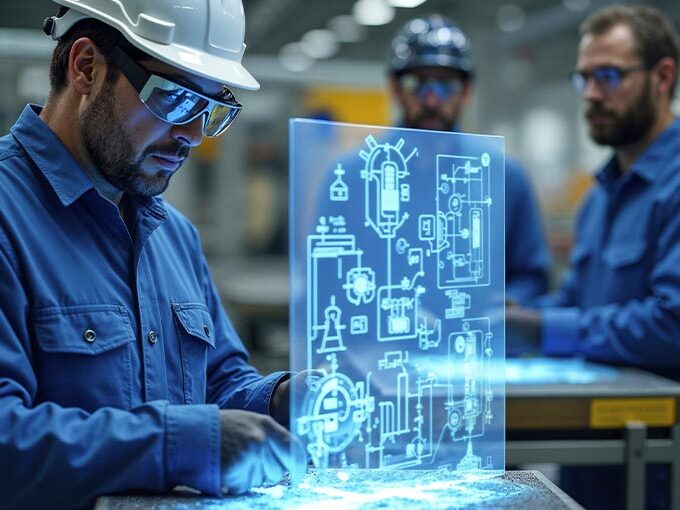
Hybrid modernization integrates digital technologies into existing systems rather than replacing them entirely. Manufacturers often refer to this process as digital retrofitting, which is the adaptation of existing manufacturing systems with Industry 4.0 technologies to improve efficiency and operational capabilities.
Rather than replacing durable infrastructure, companies add technologies such as IoT sensors, predictive maintenance software, AI-driven analytics and cloud-based monitoring platforms. The layered approach creates smarter operations while minimizing downtime and preserving capital investments.
IoT Sensors Give Legacy Equipment New Capabilities
One of the biggest drivers behind hybrid modernization is the growth of industrial IoT technology. While older machines often lack real-time monitoring capabilities, they are not obsolete. Manufacturers can attach IoT sensors to existing equipment to collect operational data without replacing the machinery itself. These sensors monitor temperature, pressure, vibration, energy consumption, humidity and equipment performance.
Plant managers can then continuously monitor machine health rather than relying solely on manual inspections. For example, an aging conveyor system may still function perfectly well mechanically. By adding vibration and temperature sensors, maintenance teams can identify early warning signs before failures occur.
A 2026 Industry 4.0 report found that 60% of manufacturers now use at least one Industry 4.0 technology, with IoT leading adoption efforts. This value is expected to grow as the technology continues to boost efficiency, connectivity and visibility in the sector.
Predictive Maintenance Extends Equipment Lifespan
Predictive maintenance has become one of the most valuable tools in hybrid modernization strategies. Traditional maintenance schedules often rely on fixed timelines, leading to unnecessary servicing or unexpected breakdowns. Predictive systems use sensor data and AI models to forecast failures before they happen.
Instead of replacing durable machinery, businesses can optimize their performance with better data and smarter monitoring. This approach helps manufacturers:
- Reduce downtime.
- Extend equipment lifespan.
- Lower maintenance costs.
- Improve production consistency.
Existing Infrastructure Still Delivers Long-Term Value
Industrial infrastructure is designed for durability. Components such as valves, fittings, steel piping and mechanical assemblies often remain highly functional long after their original installation.
Businesses that modernize recognize the value of these assets. Manufacturers, for instance, may retain durable industrial components like iron fittings and pipe nipples because of their ability to withstand heat and intense pressure. These components work alongside modern analytics and automation tools rather than being replaced by them.
This approach protects existing investments while improving operational intelligence. Replacing everything simply because newer technology exists rarely produces the strongest financial outcome. Smart modernization focuses on enhancing infrastructure rather than discarding it unnecessarily.
Sustainability Is Driving Smarter Modernization Decisions
Sustainability goals are reshaping how companies approach modernization. Manufacturers increasingly recognize that replacing functional infrastructure creates additional waste, energy consumption and material demand. Keeping reliable systems in operation while improving efficiency often supports sustainability goals more effectively than large-scale replacement projects.
Manufacturers can also integrate energy-monitoring software, emissions tracking and smart automation into existing facilities without rebuilding entire operations. Hybrid modernization helps companies:
- Reduce material waste.
- Lower energy usage.
- Improve operational efficiency.
- Extend asset life cycles.
- Minimize unnecessary disposal.
Industrial processes account for more than 21% of global carbon emissions annually, driving manufacturers to adopt decarbonization technologies that improve efficiency without requiring a complete infrastructure overhaul.
Hybrid Systems Reduce Risk During Digital Transformation
Many modernization projects fail when companies try to transform too much too quickly. Large-scale replacement initiatives often create budget overruns, production downtime, employee resistance, integration failures and training challenges.
Hybrid modernization reduces these risks by allowing businesses to modernize gradually. Phased modernization gives businesses more flexibility to test new technologies, measure ROI and scale improvements over time. An incremental approach also allows employees to adapt gradually rather than face sudden operational disruptions.
Also read: 12 Secrets to Developing A Successful Digital Transformation
Practical Steps for Building a Hybrid Legacy-Modern System
Successful modernization usually happens in stages rather than through massive overhauls.
1. Audit Existing Infrastructure
Companies should first identify which systems still perform reliably and which create bottlenecks. Many legacy assets remain operationally valuable even if their digital capabilities are limited.
2. Prioritize Data Visibility
Adding IoT sensors and monitoring platforms often provides the fastest path to operational improvements, as businesses gain immediate visibility into performance data.
3. Modernize High-Impact Areas First
Manufacturers should first focus on areas with the greatest downtime risk, maintenance costs or operational inefficiencies.
4. Build Integration Layers
Modern software should connect with existing systems rather than isolate them. Strong interoperability is essential for hybrid environments.
5. Train Teams Continuously
Modernization succeeds when employees understand both the technology and the operational goals behind it. Gradual implementation makes training more manageable.
The Future of Manufacturing Modernization
Industry 4.0 technologies continue evolving rapidly, but businesses do not need to abandon decades of infrastructure investments to stay competitive. Modernization is about improving visibility, efficiency and adaptability while preserving reliable operational foundations.
Manufacturers can strategically layer innovations gradually and build hybrid systems that deliver long-term value. The smartest factories of the future may not look completely new, yet they may operate far more intelligently than they did before.







Leave a comment