

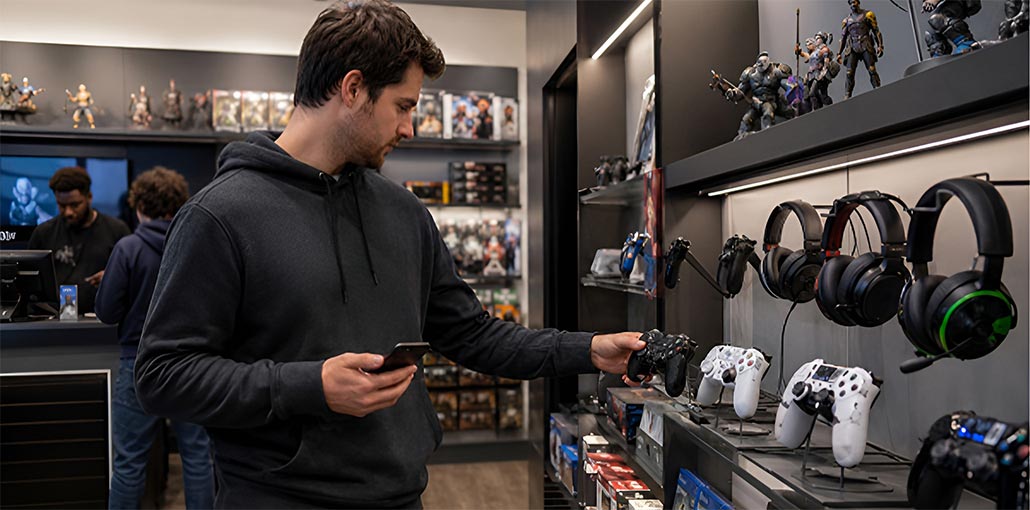
As gaming retail continues to evolve in 2026, few companies illustrate the industry’s transformation as clearly as GameStop. Once known primarily for physical game sales, GameStop now represents a hybrid retail model that combines e-commerce, trade-in services, collectibles, gaming accessories, and in-store experiences.
The Store Still Matters, Just Not in the Old Way
Gaming retail used to feel simpler. You went in, bought a game, maybe argued with yourself over the used copy, and left with a receipt folded inside the case. Now the store works more like a checkpoint.
The most successful gaming retailers are transforming stores into experience centers where customers can test peripherals, participate in tournaments, attend product launches, and engage with local gaming communities.
GameStop’s retail strategy demonstrates how hybrid commerce has become the dominant model in gaming retail.
Customers can browse GameStop’s online catalog, check local inventory, reserve products, and visit stores for pickup, trade-ins, or hands-on evaluation. Instead of treating online and offline channels separately, GameStop increasingly connects them into a single customer journey.
The Useful Part Is the Touching
A headset looks fine on a product page until you actually hold it. Same with controllers. You can read grip descriptions for ten minutes and still not know whether the shape feels wrong in your hands.
That is where physical stores continue to earn their place. Not because every purchase needs a counter and a bag. Plenty do not. But for gear you use for hours, controllers, headsets, thumb grips, storage add-ons, charging cables – the little physical doubts add up. GameStop has leaned into that mix online too, with sections for replacement controllers, gaming headsets, memory, chargers, and similar accessories.
And honestly, most people do not talk enough about how annoying returns can be.
Also read: 7 Essential Items Needed For Online Game Tournaments
Browsing Still Changes Your Mind
You might open the site for one thing and end up looking at collectibles, trading card packs, sports card boxes, plush toys, figures, board games, or graphic T-shirts. That sounds messy, but it also feels pretty close to how people actually shop.
A physical store does that differently. You see a figure you forgot existed. A pre-owned game sits lower on the shelf than the new copy. Someone is buying a gift and asking a question that no filter menu can answer cleanly.

Hybrid Shopping Is Mostly About Not Wasting the Trip
The best version of hybrid retail is not flashy. You check something online, then use the store only when the store adds something. That sounds boring, but it makes sense when you think about it.
Online Stock Turns the Store Into a Planned Stop
Nobody wants to drive across town for a product that is not there. A hybrid model helps when you can look up a console, a pre-owned game, a trading card box, or a headset before leaving home.
The funny thing is, the store visit becomes more intentional. You are not just wandering in and hoping. You already have a reason. Maybe you want same-day pickup. Maybe you want to compare two accessories. Maybe you are trading in something and want the value applied toward a new purchase.
That last bit is still very physical.
Promotions Feel Different When You’re Already There
A “deals” page online is easy to ignore until it lines up with something you were already considering. GameStop’s site regularly groups offers around categories like apparel, collectibles, accessories, pre-owned games, and limited-time sales, including free shipping language on qualifying orders over a certain amount. The exact promo will change, of course, which is why the hybrid habit matters.
You look before you go.
The sentence nobody likes admitting: a discount sometimes decides the purchase more than loyalty does. A pre-owned offer, a Pro-style deal, or a bundle of accessories can turn a vague idea into a bag at the counter. That is not romantic, but it is true.
The Trade-In Counter Is Still Weirdly Physical
You can estimate a trade-in online, sure. But the real moment still feels like handing over the item. A console with scuffed corners. A stack of old games. A controller that works except for that one sticky button you pretend is not a big deal.
The trade-in identity keeps physical stores relevant because the transaction has friction. Someone checks the condition. You ask what credit looks like. You decide whether to keep the thing after all.
But maybe that friction is part of the point.

The Product Mix Got Stranger, and That May Be the Survival Trick
A gaming retailer that only sells boxed games would feel narrow now. Too narrow. Digital downloads changed the rhythm, and subscription libraries changed it again. Physical stores had to become more than release-day shelves.
Collectibles Are Not a Side Aisle Anymore
If you have ever walked in for a game and left staring at a wall of figures or trading cards, you know the shift. GameStop’s website gives plenty of space to collectibles, toys, clothing, homewares, card packs, sports cards, and fandom items. That is not random decoration around the “real” gaming business.
For some shoppers, that stuff is the visit.
The collector side also gives stores a reason to feel local. A card pack bought on a dull Tuesday has a different mood from clicking a reorder button. Same product category, different little ritual.
Also read: 10 Best AI Shopping Assistant Tools for eCommerce Stores
Pre-Owned Keeps the Store From Feeling Disposable
Pre-owned games and used consoles have always been part of the story, but hybrid retail makes them more interesting. You can browse online, compare prices, check what is available, and then still walk into a store to inspect a case or ask about conditions.
To be fair, pre-owned buying is not always glamorous. Sometimes you are just trying to spend less. Sometimes you want an older title without paying collector prices. Sometimes you are replacing a game you sold three years ago and now regret selling, which is a very specific kind of embarrassment.
Digital Products Didn’t Erase the Counter
Digital games, downloadable content, and virtual currency could have made the store feel pointless. Weirdly enough, they did not finish the job. People still buy digital products through retail channels because gifting, budgeting, and convenience do not all behave the same way.
A parent buying a digital card in-store is not shopping like a teenager topping up an account from the couch. Same ecosystem, different person.

Stores do not need every customer to treat the store like a destination every weekend. That version of gaming retail has probably faded for a lot of people. The stronger future is more ordinary: a store that helps when online shopping gets slightly too flat.
The future of gaming retail will probably not be one clean thing. Some purchases will move fully online. Some will stay tied to shelves, staff, glass cases, and the small pleasure of finding something you did not search for. GameStop sits in that awkward middle, and I mean awkward in a good way. Gaming has always had a bit of clutter around it. The stores that survive may be the ones that stop pretending otherwise.
FAQs: Future of Gaming Retail
What is hybrid gaming retail?
Hybrid gaming retail combines online shopping with physical store services. Customers can browse products online, check local inventory, reserve items, and visit stores for pickups, trade-ins, product testing, and community events.
Are gaming collectibles a growing market?
Yes. Collectibles including figures, trading cards, plush toys, and licensed merchandise have become a major category for gaming retailers and enthusiasts.
How do trade-ins support the gaming retail ecosystem?
Trade-ins allow customers to exchange used games, consoles, and accessories for store credit or cash value, making gaming purchases more affordable while supporting the pre-owned market.
What makes hybrid retail the future of gaming commerce?
Hybrid retail gives customers flexibility by combining online convenience with physical services such as pickups, returns, trade-ins, and product testing.






Leave a comment