

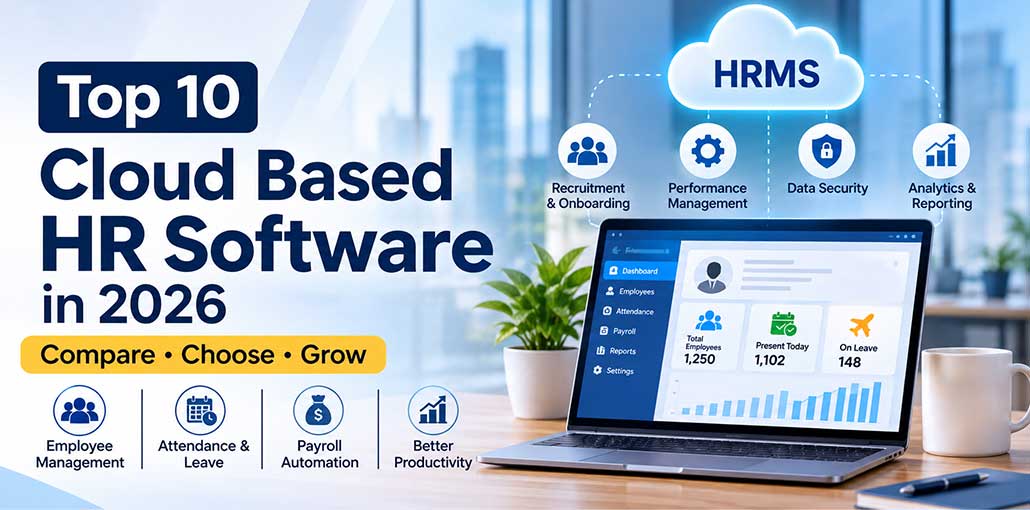
Cloud Based HR Software allows businesses to manage employee data, HR functions, time tracking, and payroll-related information through a centralized system. It can automate HR tasks, implement Role-Based Access Control (RBAC), and connect with other applications through APIs. This comparison highlights essential features such as automation, integration, and scalability to help businesses select the right HR software for their needs.
Top 10 Cloud Based HR Software in 2026
1. HROne
HROne is an HRMS platform designed to simplify employee management and automate everyday HR activities. This Cloud Based HR Software offers tools for attendance, leave management, payroll, recruitment, and employee engagement. Its centralized dashboard helps HR teams coordinate workforce operations and reduce repetitive administrative work, making it an option for businesses looking to organize their HR processes.
Key Features:
- Employee lifecycle management
- Attendance and leave management
- Payroll processing
- Recruitment and onboarding
Pros:
- Wide range of HR modules
- Employee self-service capabilities
- Workflow automation
- Centralized employee information
Cons:
- Initial setup may require planning.
- Some features may need employee training.
- Pricing may vary depending on requirements.
Also read: Getting A Customized HR Software
2. Keka
Keka is an HR and payroll platform that helps businesses manage employee records, attendance, leave, and payroll operations. This Cloud Based HR Software combines HR administration with employee self-service tools and reporting capabilities. Its interface and automation features can help organizations reduce manual tasks and improve visibility into workforce information.
Key Features:
- Payroll and tax management
- Attendance tracking
- Performance management
- Employee self-service portal
Pros:
- Integrated HR and payroll functions
- User-friendly interface
- Automated attendance workflows
- Useful reporting capabilities
Cons:
- Advanced modules may require additional configuration.
- New users may need onboarding support.
- Costs can increase with selected modules.
3. greytHR
greytHR provides HR and payroll management tools for organizations that want to streamline employee administration. The platform supports payroll processing, statutory compliance workflows, attendance tracking, leave management, and employee records. This Cloud Based HR Software is particularly relevant for businesses looking for structured payroll and HR administration capabilities.
Key Features:
- Payroll processing
- Statutory compliance management
- Leave and attendance tracking
- Employee self-service
Pros:
- Payroll-focused functionality
- Employee information management
- Automated HR workflows
- Compliance-related tools
Cons:
- The interface may take time to learn.
- Customization options can vary.
- Some advanced capabilities may require higher plans.
4. Darwinbox
Darwinbox is a human capital management platform designed to support workforce management across the employee lifecycle. Its capabilities include recruitment, onboarding, performance management, employee engagement, and workforce analytics. This Cloud Based HR Software offers a broad feature set for organizations looking for an integrated HR platform.
Key Features:
- Talent acquisition and onboarding
- Performance management
- Employee engagement
- Workforce analytics
Pros:
- Broad HCM capabilities
- Supports complex HR workflows
- Employee experience features
- Analytics and reporting tools
Cons:
- Implementation may require planning.
- Some features may be more suitable for larger organizations.
- Users may need training to use advanced modules.
5. Zoho People
Zoho People is an HR management system that helps organizations manage employee records, attendance, leave, performance, and HR workflows. It also connects with other applications in the Zoho ecosystem. Businesses can use this Cloud Based HR Software to organize employee information and automate routine HR activities.
Key Features:
- Employee database management
- Leave and attendance tracking
- Performance management
- HR workflow automation
Pros:
- Integration with Zoho applications
- Configurable HR processes
- Employee self-service options
- Useful automation capabilities
Cons:
- Advanced configuration may take time.
- Some integrations may require additional setup.
- Feature availability depends on the selected plan.
6. factoHR
factoHR offers HRMS capabilities for managing payroll, attendance, employee information, recruitment, and performance. It supports web and mobile access, helping employees and HR teams handle routine workforce activities. Organizations can use this Cloud Based HR Software to reduce manual administration and improve access to HR information.
Key Features:
- Payroll management
- Mobile attendance tracking
- Recruitment management
- Employee self-service
Pros:
- Multiple HR functions in one platform
- Mobile access
- Payroll automation
- Employee management tools
Cons:
- Some workflows may require configuration.
- Advanced features may need training.
- Integration requirements should be checked before implementation.
7. Pocket HRMS
Pocket HRMS provides digital tools for employee management, payroll, attendance, and HR administration. It includes employee self-service and automation capabilities designed to simplify routine processes. Businesses can use this Cloud Based HR Software to maintain employee records and coordinate essential HR activities through a centralized system.
Key Features:
- Payroll management
- Attendance and leave tracking
- Employee self-service
- HR reporting
Pros:
- Centralized employee records
- Payroll-related automation
- Employee access to HR information
- Multiple HR management tools
Cons:
- Some advanced functions may require training.
- Customization needs should be evaluated.
- Integration compatibility should be confirmed.
8. ZingHR
ZingHR is a digital HR platform that supports employee lifecycle management and workforce administration. Its capabilities include recruitment, onboarding, attendance, payroll, and performance management. This Cloud Based HR Software helps organizations connect different HR activities and manage employee-related processes more efficiently.
Key Features:
- Employee lifecycle management
- Recruitment and onboarding
- Payroll and attendance
- Performance management
Pros:
- Multiple HR modules
- Workforce management capabilities
- Process automation
- Employee management tools
Cons:
- Implementation requirements may vary.
- Advanced workflows can require configuration.
- Organizations should evaluate module suitability.
Also read: What is Applicant Tracking System & Top 10 ATS Software
9. PeopleStrong
PeopleStrong offers enterprise-focused HR technology for managing workforce operations and employee experiences. Its platform supports talent acquisition, core HR, payroll, performance, and workforce management. This Cloud Based HR Software can be considered by organizations seeking a broader HR technology platform for managing complex employee processes.
Key Features:
- Core HR management
- Talent acquisition
- Payroll and workforce management
- Performance management
Pros:
- Enterprise-oriented capabilities
- Broad HR functionality
- Employee lifecycle support
- Workforce management tools
Cons:
- Implementation may be more involved.
- Smaller businesses may not need every module.
- Pricing and configuration require evaluation.
10. BambooHR
BambooHR is an HR software platform focused on employee information management and essential HR processes. It offers tools for onboarding, employee records, time-off tracking, reporting, and performance management. Its centralized approach can help HR teams organize employee data and manage common administrative activities.
Key Features:
- Employee database
- Onboarding management
- Time-off tracking
- HR reporting and analytics
Pros:
- Straightforward employee management tools
- Organized employee records
- Useful onboarding features
- Reporting capabilities
Cons:
- Payroll availability varies by market.
- Some features may be limited by plan or region.
- Businesses should verify local compliance requirements.
Pricing Comparison of Top 10 Cloud Based HR Software
| HR Software | Suitable For | Pricing |
|---|---|---|
| HROne | Growing and mid-sized businesses | Starting at ₹4,950/month for 50 users |
| Keka | Small and medium-sized businesses | Custom pricing; contact sales |
| greytHR | Small and medium-sized businesses | Starting at ₹2,495/month for up to 50 employees |
| Darwinbox | Mid-sized and large enterprises | Custom pricing; contact sales |
| Zoho People | Startups and growing businesses | Starting at ₹42/user/month with annual billing |
| factoHR | Growing businesses and mid-sized organizations | Starting at approximately ₹4,499/month |
| Pocket HRMS | Small and medium-sized businesses | Contact sales for pricing |
| ZingHR | Large organizations and enterprises | Custom pricing; contact sales |
| PeopleStrong | Large enterprises | Custom pricing; contact sales |
| BambooHR | Small and growing international businesses | Starting at approximately $10/user/month |
How to Choose the Best Cloud Based HR Software?
Before selecting an HRMS platform, consider these important factors:
- Business Requirements: Identify the HR activities you want to automate, such as recruitment, payroll, attendance, onboarding, and employee management.
- Payroll Compliance: Check support for applicable Indian statutory requirements, including Provident Fund (PF), Employees’ State Insurance (ESI), professional tax, and Tax Deducted at Source (TDS).
- User Experience: Choose software that is easy for HR teams, managers, and employees to use.
- Integration: Evaluate compatibility with accounting software, biometric devices, and existing business applications through available integrations or APIs.
- Data Security: Review encryption, access controls, backups, authentication, and relevant security certifications.
- Scalability: Ensure the platform can accommodate future business growth and changing workforce requirements.
- Pricing: Compare subscription charges, implementation costs, employee limits, and additional module fees.
Conclusion
Choosing the right Cloud Based HR Software can help businesses automate HR operations, simplify payroll management, improve employee experience, and streamline workforce administration. Platforms like HROne, Keka, greytHR, and Darwinbox offer solutions for different business needs. Compare their features, pricing, scalability, and integration capabilities to find the best HRMS software for your organization’s long-term growth.
FAQs: Cloud Based HR Software
What is Cloud Based HR Software?
Cloud Based HR Software is an online platform that helps businesses manage employee records, payroll, attendance, leave, recruitment, and other HR activities through a centralized system.
Can cloud HR software manage payroll and attendance?
Yes. Many platforms combine attendance tracking, leave records, salary calculations, and payroll processing. Some also support biometric devices and mobile attendance systems.
What is the difference between cloud HR software and traditional HR software?
Cloud HR software runs on internet-based platforms and can be accessed through supported devices, while traditional HR software is often installed and maintained on local servers or computers.
Does cloud based HR software support remote employees?
Yes. Employees and HR teams can access supported features remotely through web browsers or mobile applications, subject to their assigned permissions and internet connectivity.






Leave a comment